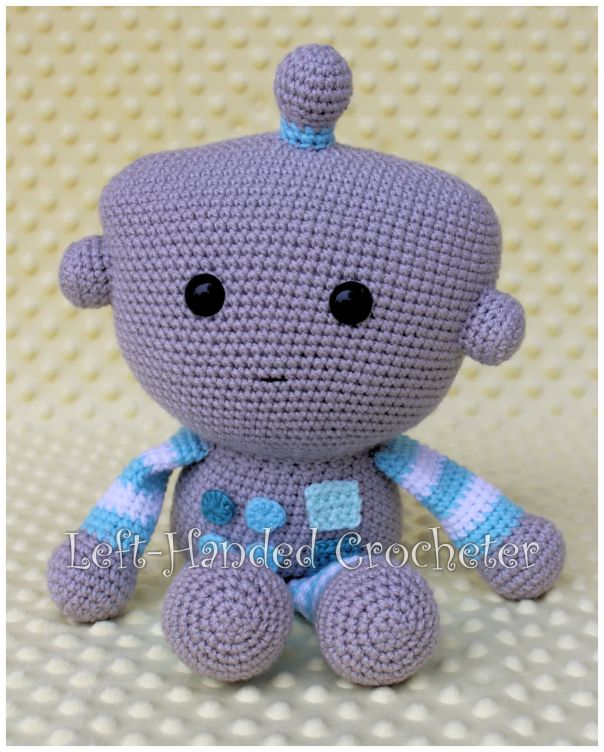
Ryan the Robot

IMG_1083

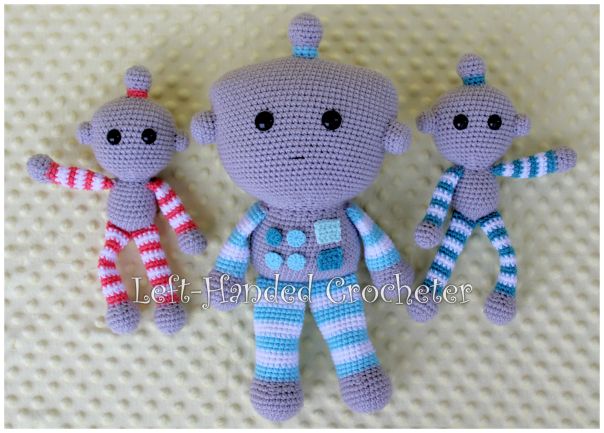
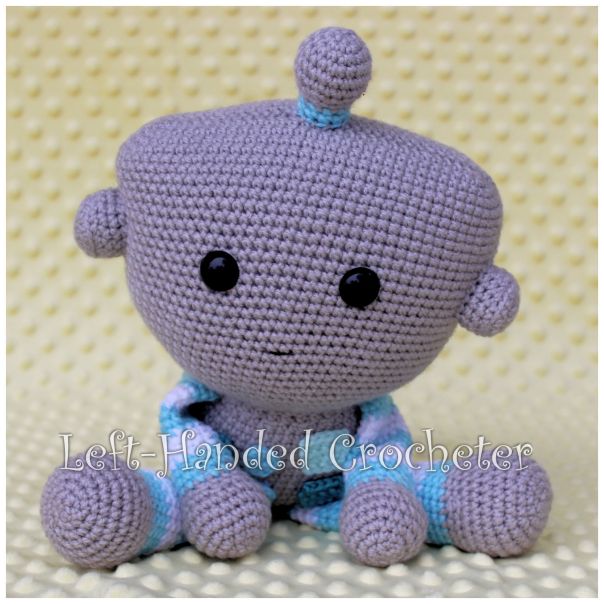
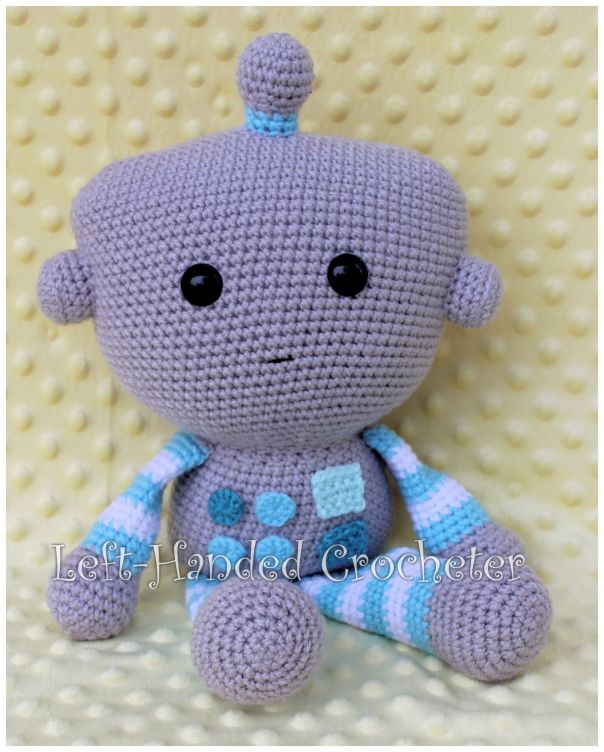
Ryan the Robot is ready for programming, but don’t be surprised if he malfunctions and does his own thing instead. He’s not very good at listening to commands, but he sure does love to be cuddled.

This finished pattern is approximately 15 inches tall from the top of his antennae to the bottom of his feet. Using baby yarn makes him extra soft and extra cute.
IMG_1086

Abbreviations:

ch: chain

sc: single crochet

inc: increase (2 single crochets in one loop)

dec: decrease (pull yarn through loop, pull yarn through second loop, yarn over and pull through all loops)

Materials needed (with affiliate links):

F (3.75mm) crochet hook

Baby yarn, or any size 3 yarn. For Ryan, I used Loops and Threads Snuggly Wuggly yarn in soft grey and white and Bernat Softee Baby in aqua.

18mm safety eyes

Black embroidery thread

Yarn needle

Poly-fil

This pattern is worked “in-the-round”, and stitches are worked through both loops unless otherwise noted. 

Head:

With grey yarn, ch. 31

Row 1: This is worked around the chain you just made. Sc in 2nd chain from hook and in each across, working 3 sc’s into the last ch. Turn and work in the other loop of the chain and sc across, working 2 sc’s in last ch. St st to 1st sc, ch. 1. (62 total stitches)
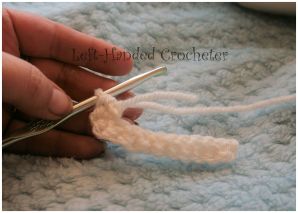
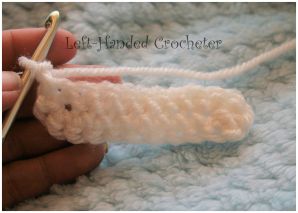
Row 2: 2 sc in first stitch, sc in next 28 stitches, work 2 sc’s in each of the next 3 stitches, sc in next 28, work 2 sc’s in each of the next 2. St sl to 1st sc, ch. 1. (68 total stitches)

Row 3: 2 sc in first stitch, sc in next 31 stitches, work 2 sc’s in each of the next 3 stitches, sc in next 31, work 2 sc’s in each of the next 2. St sl to 1st sc, ch. 1. (74 total stitches)

Row 4: 2 sc in first stitch, sc in next 34 stitches, work 2 sc’s in each of the next 3 stitches, sc in next 34, work 2 sc’s in each of the next 2. St sl to 1st sc, ch. 1. (80 total stitches)

Rows 5-29: Sc in each stitch around. (80 total stitches)

Row 30: *Dec in first 2 stitches, sc in next 3 stitches, repeat from * around. (64 stitches)

Row 31: *Dec in first 2 stitches, sc in next 2 stitches, repeat from * around. (48 stitches)

Row 32: *Dec in first 2 stitches, sc in next stitch, repeat from * around. (32 stitches)

Tie off. Stuff with poly-fil. Insert safety eyes between rows 14 and 15 with 11 stitches in between them. Sew mouth on with embroidery thread.

Antennae:

With grey yarn, ch 3. Sl st to first ch to create circle. (Instead, you can perform the “magic circle” if you’d like.)

Row 1: ch 1, 5 sc inside of circle. (5 stitches)

Row 2: Inc in each stitch around. (10 stitches)

Row 3: *Inc in first stitch, sc in next stitch, repeat from * around. (15 stitches)

Row 4: *Inc in first stitch, sc in next 2 stitches, repeat from * around. (20 stitches)

Rows 5-6: Sc in each stitch around. (20 stitches)

Row 7: *Dec in first 2 stitches, sc in next 2 stitches, repeat from * around. (15 stitches)

Row 8: *Dec in first 2 stitches, sc in next stitch, repeat from * around. (10 stitches)

Switch to aqua

Rows 7-8: Sc in each stitch around. (10 stitches)

Tie off. Stuff with poly-fil. Center on top of head and sew on.

Ear Bolts:

With grey yarn, ch 3. Sl st to first ch to create circle. (Instead, you can perform the “magic circle” if you’d like.)

Row 1: ch 1, 10 sc inside of circle. (10 stitches)

Row 2: *Inc in first stitch, sc in next stitch, repeat from * around. (15 stitches)

Row 3: *Inc in first stitch, sc in next 2 stitches, repeat from * around. (20 stitches)

Row 4: In front loops only, *dec in first 2 stitches, sc in next 2 stitches, repeat from * around. (15 stitches)

Rows 5-6: Sc in each stitch around. (15 stitches)

Tie off. Stuff with poly-fil. Sew onto sides of head.

Body:

With grey yarn, ch. 18

Row 1: This is worked around the chain you just made. Sc in 2nd chain from hook and in each across, working 3 sc’s into the last ch. Turn and work in the other loop of the chain and sc across, working 2 sc’s in last ch. St st to 1st sc, ch. 1. (36 total stitches)

Row 2: 2 sc in first stitch, sc in next 15 stitches, work 2 sc’s in each of the next 3 stitches, sc in next 15, work 2 sc’s in each of the next 2. St sl to 1st sc, ch. 1. (42 total stitches)

Row 3: 2 sc in first stitch, sc in next 18 stitches, work 2 sc’s in each of the next 3 stitches, sc in next 18, work 2 sc’s in each of the next 2. St sl to 1st sc, ch. 1. (48 total stitches)

Rows 4-18: Sc in each stitch around. (48 total stitches)

Row 19: *Dec in first 2 stitches, sc in next stitch, repeat from * around. (32 stitches)

Tie off. Stuff with poly-fil. Sew head onto body.

Arms:

With grey yarn, ch 3. Sl st to first ch to create circle. (Instead, you can perform the “magic circle” if you’d like.)

Row 1: ch 1, 5 sc inside of circle. (5 stitches)

Row 2: Inc in each stitch around. (10 stitches)

Row 3: *Inc in first stitch, sc in next stitch, repeat from * around. (15 stitches)

Row 4: *Inc in first stitch, sc in next 2 stitches, repeat from * around. (20 stitches)

Row 5: *Inc in first stitch, sc in next 3 stitches, repeat from * around. (25 stitches)

Rows 6-7: Sc in each stitch around. (25 stitches)

Row 8: *Dec in first 2 stitches, sc in next 3 stitches, repeat from * around. (20 stitches)

Row 9: *Dec in first 2 stitches, sc in next 2 stitches, repeat from * around. (15 stitches)

Switch to aqua.

Rows 10-12: Sc in each stitch around. (15 total stitches)

Stuff to this point with poly-fil.

Switch to white.

Rows 13-15: Sc in each stitch around. (15 total stitches)

Switch to aqua.

Rows 16-18: Sc in each stitch around. (15 total stitches)

Switch to white.

Rows 19-21: Sc in each stitch around. (15 total stitches)

Switch to aqua.

Rows 22-24: Sc in each stitch around. (15 total stitches)

Tie off. Make two. Sew onto sides of body.

Legs:

With grey yarn, ch 3. Sl st to first ch to create circle. (Instead, you can perform the “magic circle” if you’d like.)

Row 1: ch 1, 5 sc inside of circle. (5 stitches)

Row 2: Inc in each stitch around. (10 stitches)

Row 3: *Inc in first stitch, sc in next stitch, repeat from * around. (15 stitches)

Row 4: *Inc in first stitch, sc in next 2 stitches, repeat from * around. (20 stitches)

Row 5: *Inc in first stitch, sc in next 3 stitches, repeat from * around. (25 stitches)

Row 6: *Inc in first stitch, sc in next 4 stitches, repeat from * around. (30 stitches)

Rows 7-9: Sc in each stitch around. (30 total stitches)

Row 10: *Dec in first 2 stitches, sc in next 4 stitches, repeat from * around. (25 stitches)

Row 11: *Dec in first 2 stitches, sc in next 3 stitches, repeat from * around. (20 stitches)

Switch to aqua.

Rows 12-14: Sc in each stitch around. (20 total stitches)

Switch to white.

Rows 15-17: Sc in each stitch around. (20 total stitches)

Switch to aqua.

Rows 18-20: Sc in each stitch around. (20 total stitches)

Stuff to this point with poly-fil.

Switch to white.

Rows 21-23: Sc in each stitch around. (20 total stitches)

Switch to aqua.

Rows 24-26: Sc in each stitch around. (20 total stitches)

Switch to white.

Rows 27-29: Sc in each stitch around. (20 total stitches)

Switch to aqua.

Rows 30-32: Sc in each stitch around. (20 total stitches)

Tie off. Make two. Sew to bottom of body.

Round buttons:

Ch 3. Sl st to first ch to create circle. (Instead, you can perform the “magic circle” if you’d like.)

Ch 1, 10 sc inside of circle. Sl st to first sc. Tie off. Make 4.

Square buttons:

Ch. 5

Row 1: Sc in 2nd ch from hook and in each across, ch 1, turn. (4 stitches)

Rows 2-4: Sc in each stitch across, ch 1, turn.

Tie off.

Sew buttons onto robot. If you want, you can hot glue them on like I did.
IMG_1089

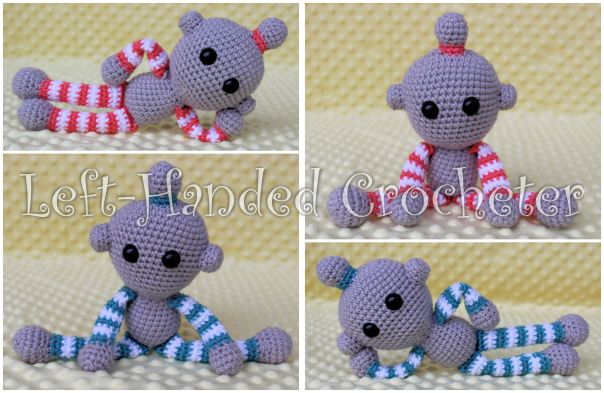
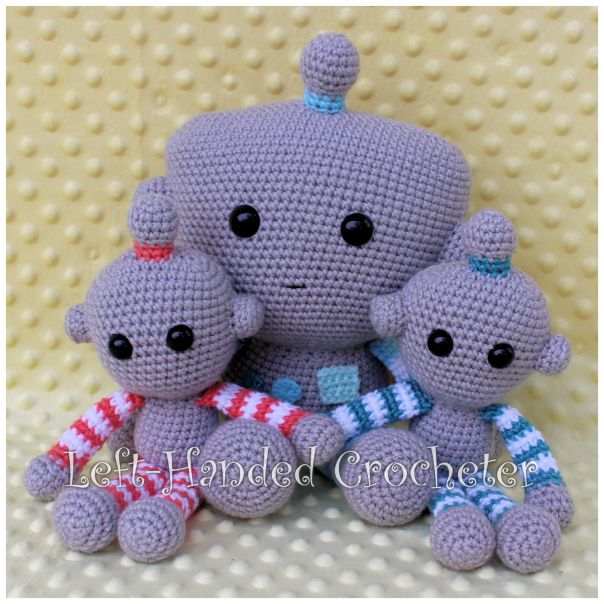
If you want a pattern that you can save on your computer and easily print, this pattern is available in my Ravelry shop for only $2.00. I love printing patterns and saving them in a binder to keep track of the ones I’ve done and the ones I still plan to do. If you purchase this pattern on Ravelry, you also get the pattern for the mini robots.
Collage3

IMG_1096

IMG_1155

I hope you enjoy this pattern! You’re welcome to sell items that you make using my patterns, as long as you don’t post the pattern anywhere else, and link back to my page if you’d like to. If there are any mistakes, or something is unclear, please feel free to leave me a comment and let me know. Or message me on Facebook. If you create any robots of your own, be sure to post a photo on my Facebook page so I can see. I love seeing all of the things people are creating, and I’d love to see the different variations that people make of these.

St. Patrick’s Day Crochet Pattern Roundup

St. Patrick’s Day is next month, and I have to admit it’s one of my favorite holidays. I don’t really celebrate it other than wearing green, but green has been my favorite color since I was 12 years old. I always loved having that one day where almost everybody I saw was wearing my favorite color.

So I spent some time on Pinterest looking at fun St. Patrick’s Day patterns. There are a lot of them on there, but I managed to narrow it down to 9 of my favorites. Go check them all out, and put a couple of them on your agenda.

Collage2

  1. Make yourself a hat to wear with this pattern from Red Heart yarns.
  2. Whip up a couple of hat beer cozies for you and all of your friends with this pattern from You Should Craft.
  3. Seamus the Shamrock is so adorable and the pattern is free from Spin A Yarn Crochet.
  4. This rainbow infinity scarf is so beautiful, and would look great in other colors too. The pattern is free from Left in Knots.
  5. This crocheted shamrock pattern is so easy to do. String them up and make some garland to decorate around the house. The pattern is free on Everything Etsy.
  6. I love this crocheted shamrock scarf. The colors are gorgeous, and it looks so warm and cozy. You can find this pattern free from Repeat Crafter Me.
  7. This shamrock pattern looks fairly easy, with full photo instructions. It would make a great table runner, or even a headband. The pattern is free from My Picot.
  8. I love boot cuffs, and these ones are so adorable. Change the colors and they’d make great Santa ones to wear at Christmas. This pattern is free from Intertwined Art.
  9. This pot of gold is so cute with the rainbow handle. It would be great to make for any kids in your life, then fill it with some little candies. This pattern is free from Eden Reborn.

I hope you found something here that you love. If you’ve found any other great St. Patrick’s Day pattern, go tell me about it on my Facebook page.

Mini Monsters

Collage1

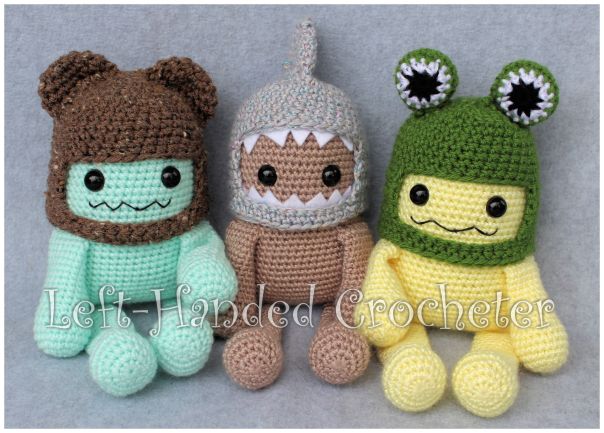
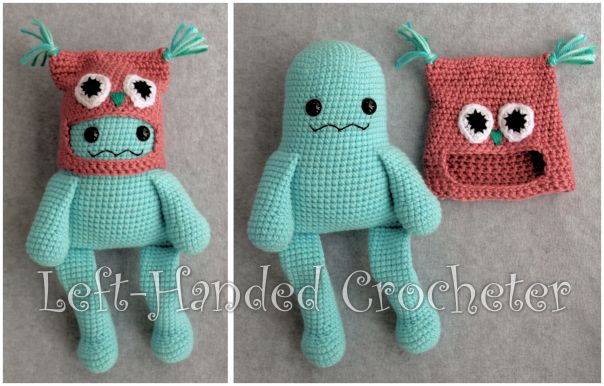
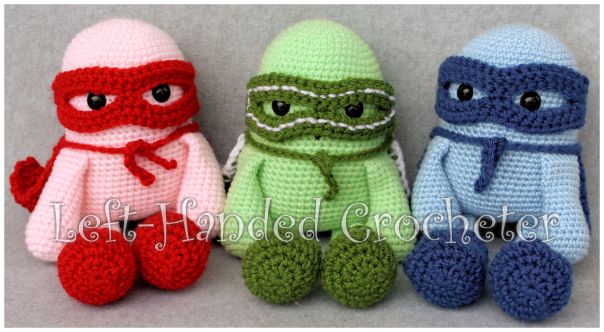
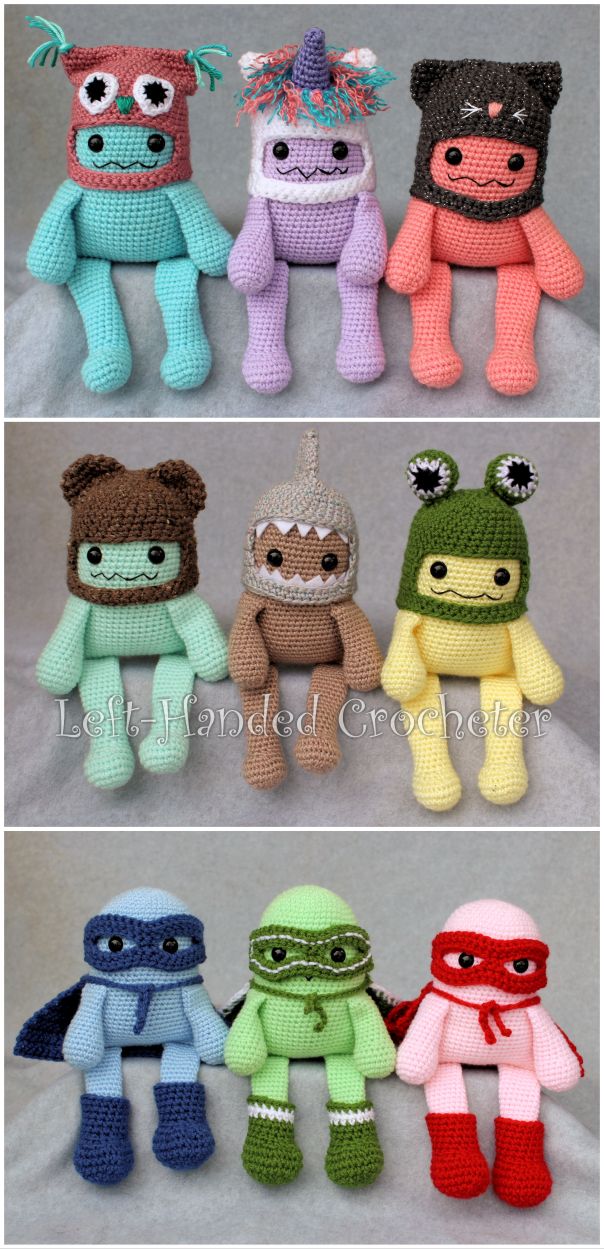
I’ve had so much fun making mini monsters lately, I just couldn’t stop. They’re such a fun pattern that doesn’t take much time at all to make. With removable accessories, you could make 1 monster with all of the hats to change him into, or you could do like I did and make a monster for each hat. Don’t forget to check out Camp Happy Heart Fibre Arts on Facebook to see the awesome monsters she makes that inspired these patterns.

Here are the patterns for the monster, and each of the hat accessories. If you want the patterns for the super hero accessories, you’ll have to purchase the whole set on Ravelry. It’s worth it to have a pattern that you can save on your computer and easily print. I love printing patterns and saving them in a binder to keep track of the ones I’ve done and the ones I still plan to do.


Abbreviations:

ch: chain

sc: single crochet

inc: increase (2 single crochets in one loop)

dec: decrease (pull yarn through loop, pull yarn through second loop, yarn over and pull through all loops)

Materials needed (with affiliate links):

E (3.5mm) crochet hook

Baby yarn, or any size 3 yarn.

15mm safety eyes

Black embroidery thread

Yarn needle

Poly-fil

This pattern is worked “in-the-round”, and stitches are worked through both loops unless otherwise noted. 

Body:

ch 3. Sl st to first ch to create circle. (Instead, you can perform the “magic circle” if you’d like.)

Row 1: ch 1, 10 sc inside of circle. (10 stitches)

Row 2: *Inc in first stitch, sc in next stitch, repeat from * around. (15 stitches)

Row 3: *Inc in first stitch, sc in next 2 stitches, repeat from * around. (20 stitches)

Row 4: *Inc in first stitch, sc in next 3 stitches, repeat from * around. (25 stitches)

Row 5: *Inc in first stitch, sc in next 4 stitches, repeat from * around. (30 stitches)

Row 6: *Inc in first stitch, sc in next 5 stitches, repeat from * around. (35 stitches)

Row 7: *Inc in first stitch, sc in next 6 stitches, repeat from * around. (40 stitches)

Row 8: *Inc in first stitch, sc in next 7 stitches, repeat from * around. (45 stitches)

Row 9: *Inc in first stitch, sc in next 8 stitches, repeat from * around. (50 stitches)

Rows 10-40: Sc in each stitch around. (50 stitches)

Tie off, leaving open at the bottom.

Insert safety eyes between rows 16 and 17, with 9 sc’s in between eyes. (I like to put the poly-fil in before I insert the eyes so I can decide which side looks best for the front.) Stuff with poly-fil, and sew closed across the bottom. Using embroidery thread, sew on mouth.

Arms:

Ch 3. Sl st to first ch to create circle. (Instead, you can perform the “magic circle” if you’d like.)

Row 1: ch 1, 10 sc inside of circle. (10 stitches)

Row 2: *Inc in first stitch, sc in next stitch, repeat from * around. (15 stitches)

Row 3: *Inc in first stitch, sc in next 2 stitches, repeat from * around. (20 stitches)

Rows 4-7: Sc in each stitch around. (20 stitches)


Row 8: *Dec in first 2 stitches, sc in next 2 stitches, repeat from * around. (15 stitches)

Rows 9-18: Sc in each stitch around. (15 stitches)

Tie off. Stuff halfway with poly-fil, leaving the rest of the arm empty and flattened. You can make the arms shorter or longer by adding or subtracting rows, and you can change how full you stuff them as well.

Legs:

Ch 3. Sl st to first ch to create circle. (Instead, you can perform the “magic circle” if you’d like.)

Row 1: ch 1, 10 sc inside of circle. (10 stitches)

Row 2: *Inc in first stitch, sc in next stitch, repeat from * around. (15 stitches)

Row 3: *Inc in first stitch, sc in next 2 stitches, repeat from * around. (20 stitches)

Row 4: *Inc in first stitch, sc in next 3 stitches, repeat from * around. (25 stitches)


Rows 5-6: Sc in each stitch around. (25 stitches)

Row 7: Sc in first 7 stitches, dec in next 10 stitches (5 dec’s), sc in next 8 stitches. (20 stitches)

Row 8: Sc in first 5 stitches, dec in next 10 stitches (5 dec’s), sc in next 5 stitches. (15 stitches)

Rows 9-13: Sc in each stitch around. (15 stitches)

Stop at this point and stuff with poly-fil. You won’t stuff beyond this point, so make sure it’s stuffed in there really tight.

Rows 14-28: Sc in each stitch around. (15 stitches)

Tie off. You can make the legs shorter or longer by adding or subtracting rows, and you can change how full you stuff them as well.

Sew legs to bottom, lining them up with the edge of the body. Sew the arms on at row 25 of the body. I usually position the arms so they’re slightly in the front, not on the sides.

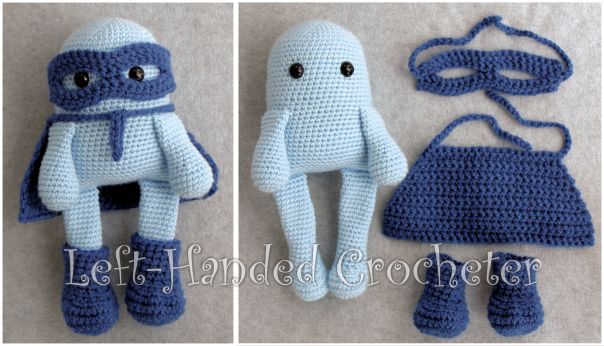
IMG_0942

The placement of the eyes and arms are important for the hats to fit right, so be sure you count the rows and attach them where the pattern says to.

Hats

IMG_0915

IMG_0918

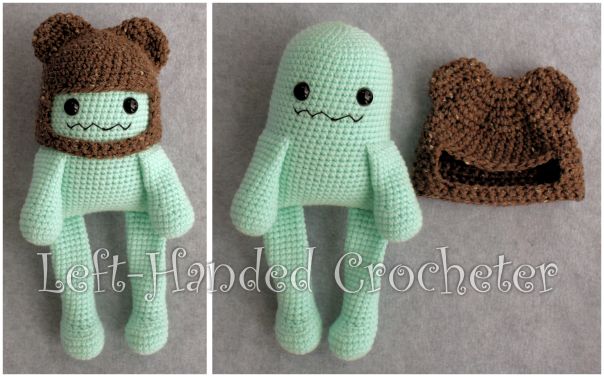
There are 2 basic patterns for the hats, a round one and a square one.

Materials needed (with affiliate links):

Any worsted weight (size 4) yarn

I (5.5mm) crochet hook

Yarn needle

White felt (for shark hat)

This pattern is worked “in-the-round”, and stitches are worked through both loops unless otherwise noted. 

Round Hat

Ch 3. Sl st to first ch to create circle. (Instead, you can perform the “magic circle” if you’d like.)

Row 1: ch 1, 10 sc inside of circle. (10 stitches)

Row 2: *Inc in first stitch, sc in next stitch , repeat from * around. (15 stitches)

Row 3: *Inc in first stitch, sc in next 2 stitches, repeat from * around. (20 stitches)

Row 4: *Inc in first stitch, sc in next 3 stitches, repeat from * around. (25 stitches)

Row 5: *Inc in first stitch, sc in next 4 stitches, repeat from * around. (30 stitches)

Row 6: *Inc in first stitch, sc in next 5 stitches, repeat from * around. (35 stitches)

Rows 7-12: Sc in each stitch around. (35 stitches)

Row 13: Sc in next 25 stitches, leaving last 10 stitches unworked. Ch 1, turn. (25 stitches)

Rows 14-17: Sc across, ch 1, turn. (25 stitches)

Row 18: Sc across, ch 12, sl st to first sc.

Row 19: Sc in each stitch around, working 12 sc’s into ch 12 space. (37 stitches)

Rows 20-21: Continuing working in the round, sc in each stitch around. (37 stitches)

Tie off.

Square Hat

Ch. 35. Attach to first ch to form a ring.

Row 1: Sc in each ch around. (35 stitches)

Rows 2-13: Sc in each stitch around. (35 stitches)

Row 14: Sc in next 25 stitches, leaving last 10 stitches unworked. Ch 1, turn. (25 stitches)

Rows 15-18: Sc across, ch 1, turn. (25 stitches)

Row 19: Sc across, ch 12, sl st to first sc.

Row 20: Sc in each stitch around, working 12 sc’s into ch 12 space. (37 stitches)

Rows 21-22: Continuing working in the round, sc in each stitch around. (37 stitches)

Tie off. Using yarn and yarn needle, sew across the top to close it.

Unicorn Hat

IMG_0985

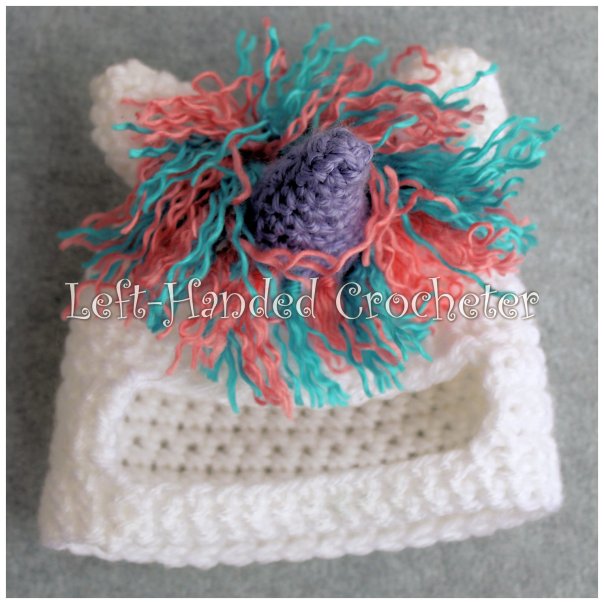
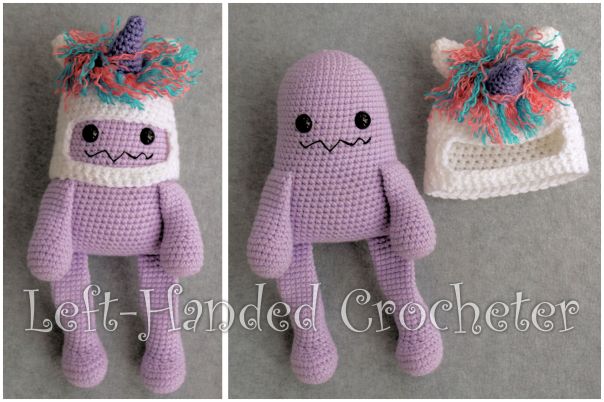
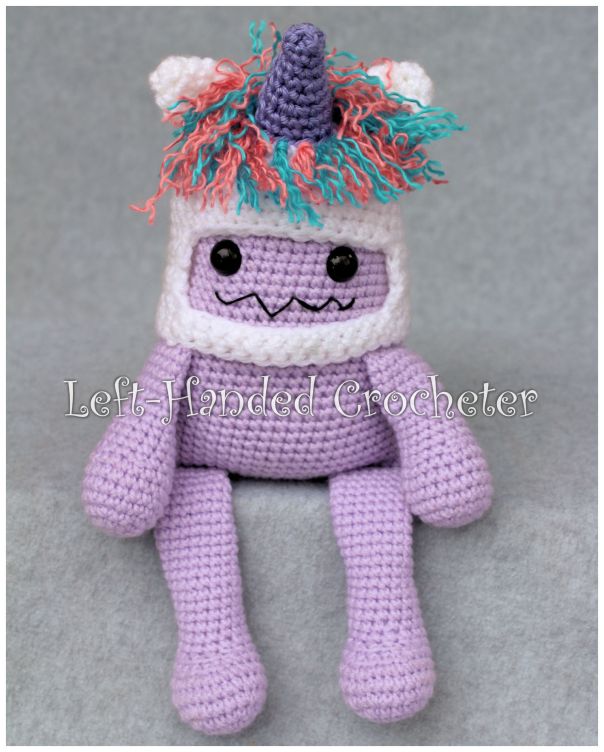
For the unicorn hat, use the round hat pattern. I used Lion Brand Vanna’s Choice yarn in white for the hat and ears. I used Caron Simply Soft Periwinkle for the horn, and other Simply Soft colors for the hair.

Ears

Ch 3. Sl st to first ch to create circle. (Instead, you can perform the “magic circle” if you’d like.)

Row 1: ch 1, 5 sc inside of circle. (5 stitches)

Row 2: Sc in each stitch around. (5 stitches)

Row 3: Inc in each stitch around. (10 stitches)

Rows 4-6: Sc in each stitch around. (10 stitches)

Tie off. Lay flat and sew onto hat. I find it helpful to put the hat on the monster’s head when sewing pieces on, to be able to get them where I want them. Just be sure to only sew onto the hat and not into the monster.

Horn

Ch 3. Sl st to first ch to create circle. (Instead, you can perform the “magic circle” if you’d like.)

Row 1: ch 1, 4 sc inside of circle. (4 stitches)

Row 2: Sc in each stitch around. (4 stitches)

Row 3: *Inc in first stitch, sc in next stitch , repeat from * around. (6 stitches)

Row 4: Sc in each stitch around. (6 stitches)

Row 5: *Inc in first stitch, sc in next 2 stitches, repeat from * around. (8 stitches)

Row 6: Sc in each stitch around. (8 stitches)

Row 7: *Inc in first stitch, sc in next 3 stitches, repeat from * around. (10 stitches)

Rows 8-9: Sc in each stitch around. (10 stitches)

Tie off. Stuff with poly-fil and sew onto hat. Attach hair around horn.

Collage9

IMG_0893

Owl Hat

IMG_0975

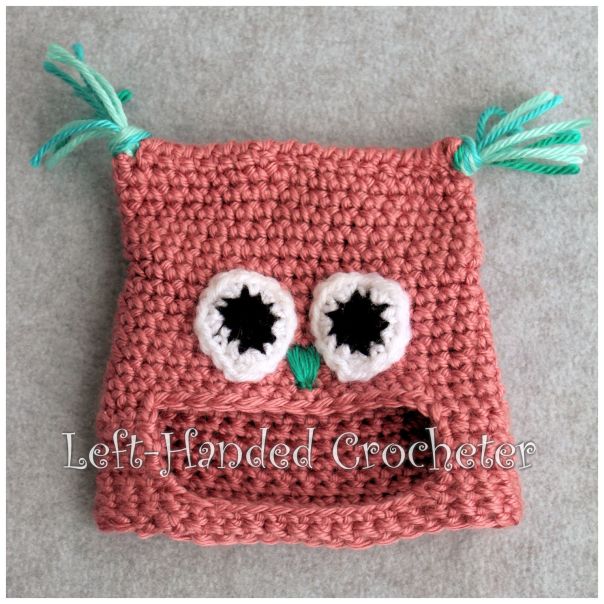
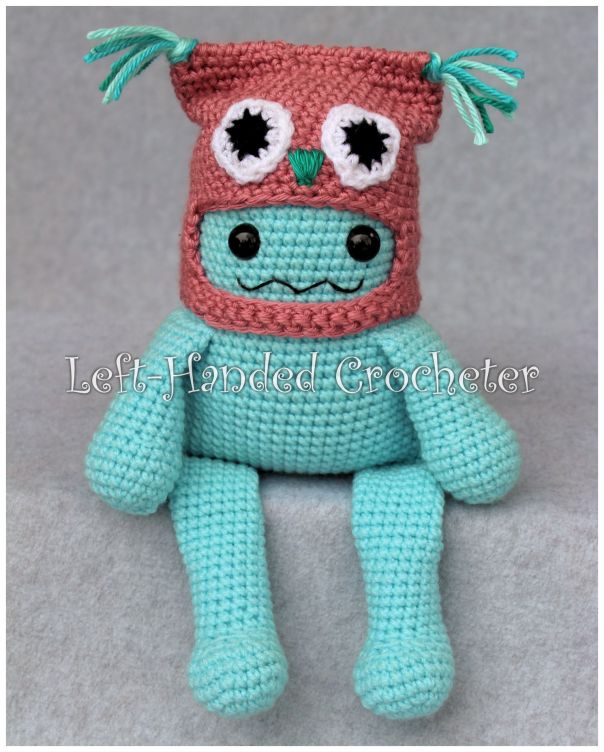
For the owl hat, use the square hat pattern. I used Caron Simply Soft in Plum Wine for the hat, and cool green, robin’s egg blue and aqua for the hair and beak. I used Lion Brand Vanna’s Choice yarn in white and black for the eyes.

Eyes

With black yarn, ch 3. Sl st to first ch to create circle. (Instead, you can perform the “magic circle” if you’d like.)

Row 1: ch 1, 10 sc inside of circle. (10 stitches)

Switch to white yarn.

Row 2: *Inc in first stitch, sc in next stitch , repeat from * around. (15 stitches)

Tie off. Sew or hot glue eyes onto hat. Use yarn needle and yarn to sew on beak. Attach hair at the corners. I find it helpful to put the hat on the monster’s head when sewing pieces on, to be able to get them where I want them. Just be sure to only sew onto the hat and not into the monster.

Collage8

IMG_0890

Bear Hat

IMG_0951

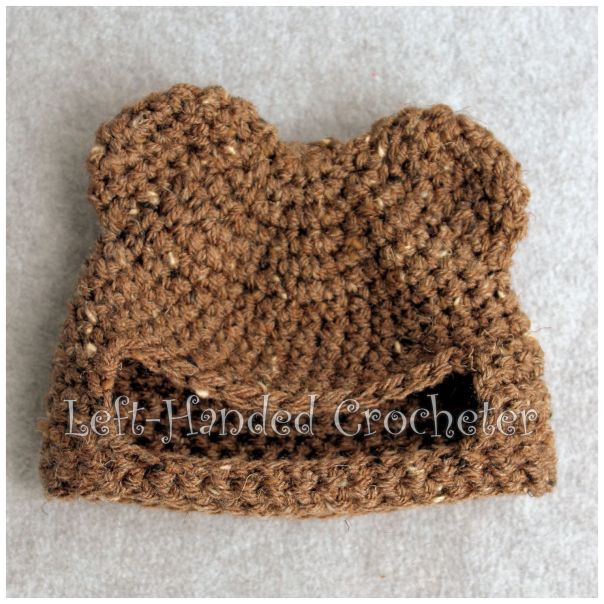
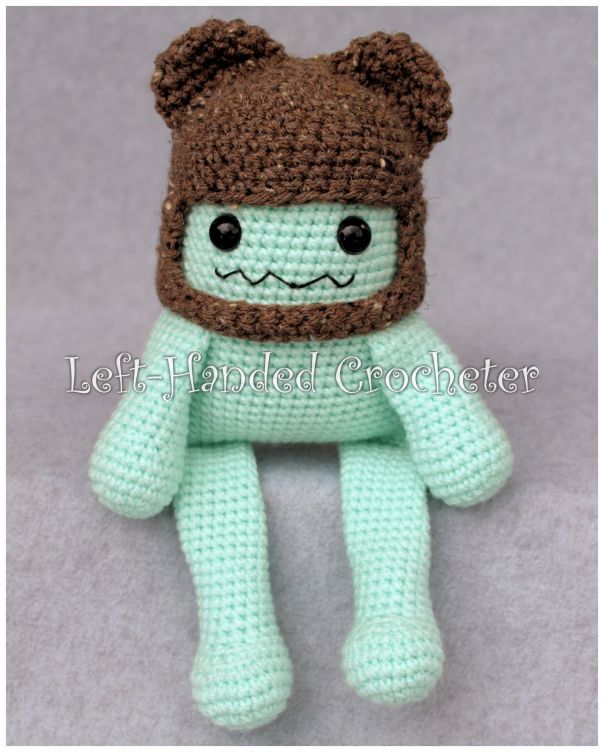
For the bear hat, use the round hat pattern. I used Lion Brand Vanna’s Choice yarn in barley.

Ears

Ch 3. Sl st to first ch to create circle. (Instead, you can perform the “magic circle” if you’d like.)

Row 1: ch 1, 10 sc inside of circle. (10 stitches)

Row 2: *Inc in first stitch, sc in next stitch , repeat from * around. (15 stitches)

Rows 3-4: Sc in each stitch around. (15 stitches)

Tie off. Lay flat and sew onto hat. I find it helpful to put the hat on the monster’s head when sewing pieces on, to be able to get them where I want them. Just be sure to only sew onto the hat and not into the monster.

Collage6

IMG_0883

Cat Hat

IMG_0944

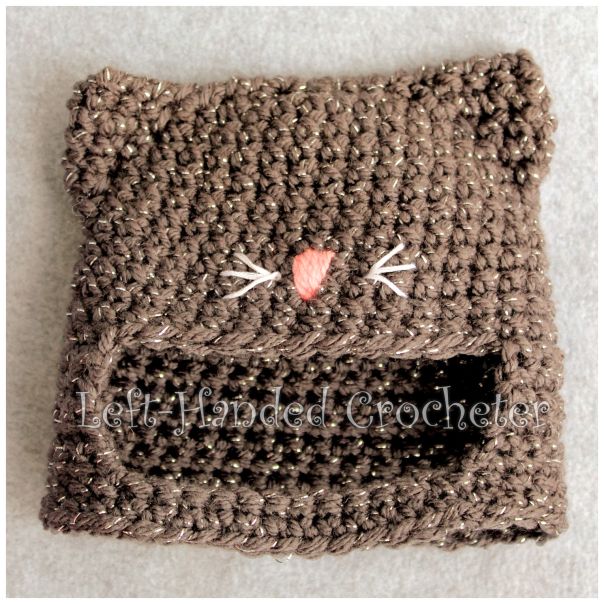
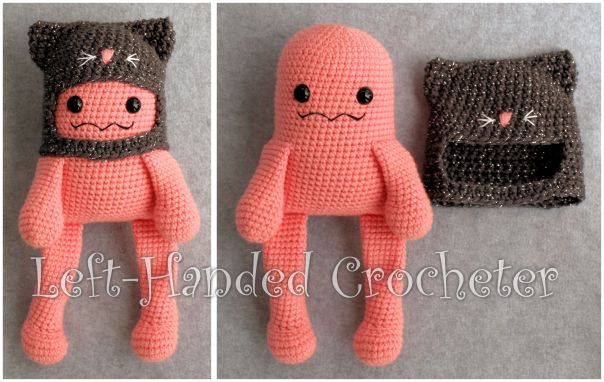
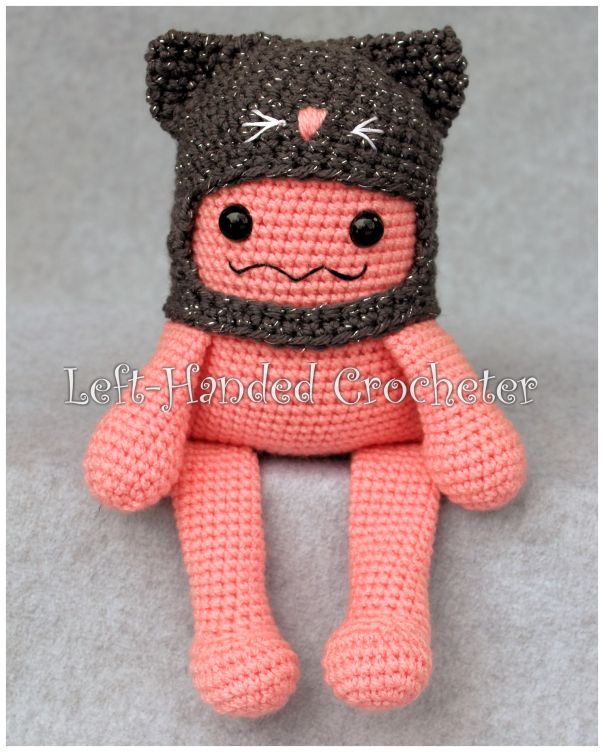
For the cat hat, use the square hat pattern. I used Red Heart w/Love in charcoal for the hat. I used Caron Simply Soft in white for the whiskers and soft pink for the nose.

Once you have the square hat finished and the top sewn shut, place the hat on the monsters head and stitch diagonally up each side to create the ears. Use your yarn needle and yarn (or embroidery thread) to create the whiskers and nose. You can add eyes to the cat hat if you want to, but I liked the way it looked without them.

Collage5

IMG_0882

Frog Hat

IMG_0962

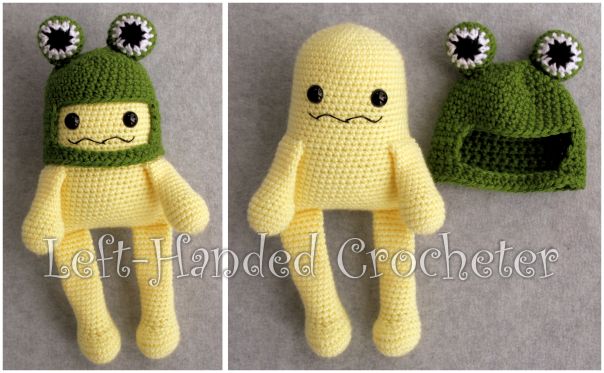
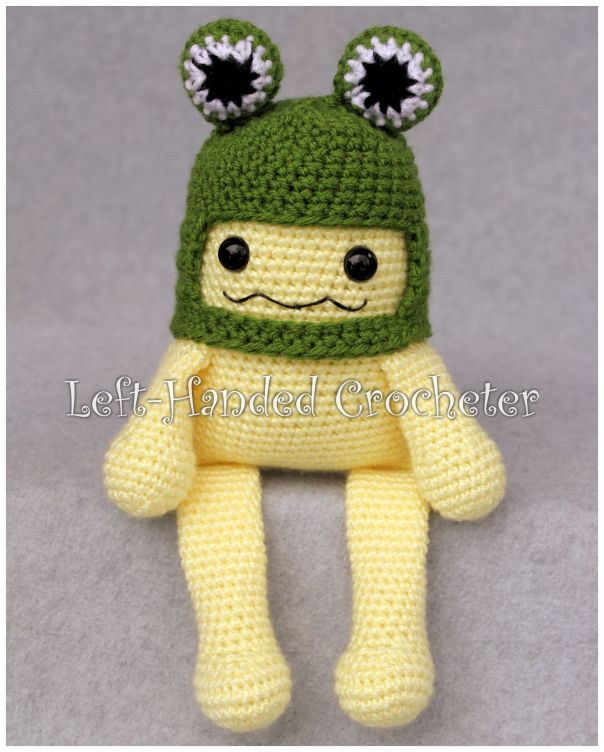
For the frog hat, use the round hat pattern. I used Lion Brand Vanna’s Choice yarn in kelly green, white and black.

Eyes

With black yarn, ch 3. Sl st to first ch to create circle. (Instead, you can perform the “magic circle” if you’d like.)

Row 1: ch 1, 10 sc inside of circle. (10 stitches)

Switch to white yarn.

Row 2: *Inc in first stitch, sc in next stitch , repeat from * around. (15 stitches)

Switch to kelly green.

Rows 3-5: Sc in each stitch around. (15 stitches)

Row 4: *Dec in first 2 stitches, sc in next stitch, repeat from * around. (10 stitches)

Stuff with poly-fil.

Row 5: Dec around. (5 stitches)

Sew hole closed. Use yarn needle and yarn to sew eyes onto top of hat. I find it helpful to put the hat on the monster’s head when sewing pieces on, to be able to get them where I want them. Just be sure to only sew onto the hat and not into the monster.

Collage7

IMG_0877

Shark Hat

IMG_0930

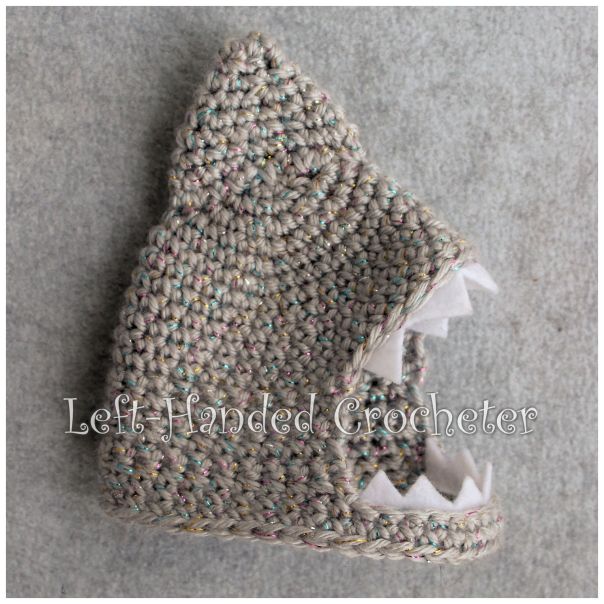
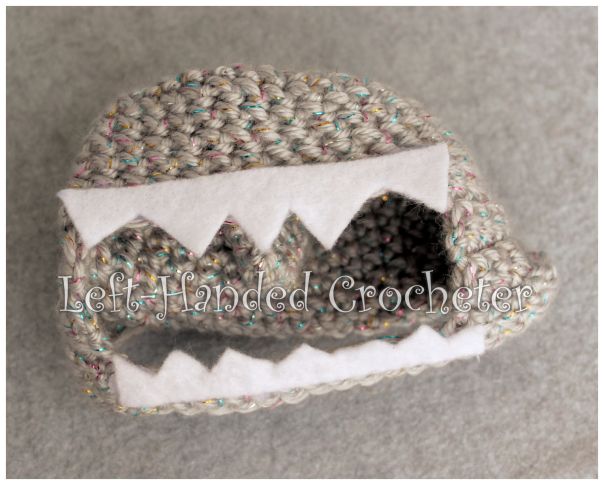
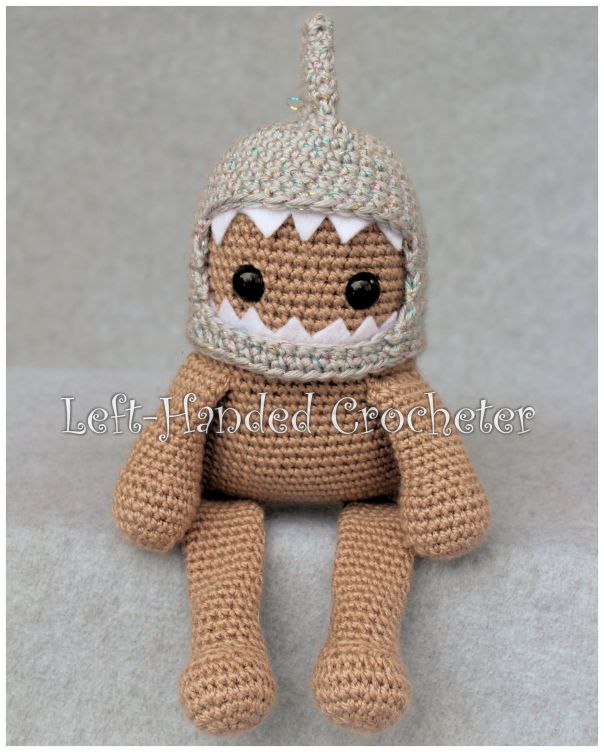
For the shark hat, use the round hat pattern. I used Caron Simply Soft Party in silver sparkle.

Fin

Ch 3. Sl st to first ch to create circle. (Instead, you can perform the “magic circle” if you’d like.)

Row 1: ch 1, 5 sc inside of circle. (5 stitches)

Row 2: Sc in each stitch around. (5 stitches)

Row 3: Inc in each stitch around. (10 stitches)

Row 4: Sc in each stitch around. (10 stitches)

Row 5: *Inc in first stitch, sc in next stitch , repeat from * around. (15 stitches)

Row 6: Sc in each stitch around. (15 stitches)

Row 7: *Inc in first stitch, sc in next 2 stitches, repeat from * around. (20 stitches)

Row 8: Sc in each stitch around. (20 stitches)

Tie off. Using yarn needle and yarn, sew onto top of hat. I find it helpful to put the hat on the monster’s head when sewing pieces on, to be able to get them where I want them. Just be sure to only sew onto the hat and not into the monster. 

Cut out shark teeth with white felt. You can sew the teeth on, or do like I did and hot glue it. Just make sure you attach the teeth to the inside of the hat.

IMG_0933

Collage4

IMG_0873

Don’t forget, if you want the patterns for the super hero accessories, you’ll have to purchase the full set on my Ravelry.

IMG_0922

Collage10

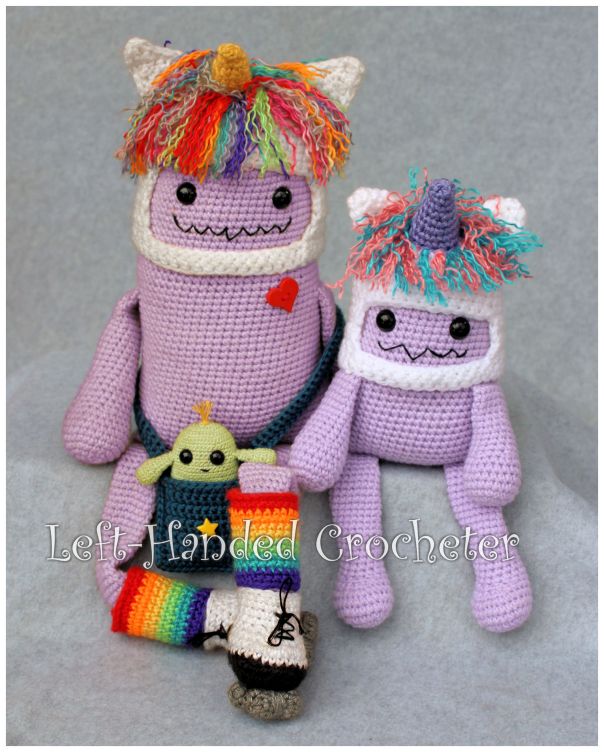
Be sure to check out the patterns for my big monsters too. The mini ones look really cute with the big ones.


IMG_0900

I hope you enjoy this pattern! You’re welcome to sell items that you make using my patterns, as long as you don’t post the pattern anywhere else, and link back to my page if you’d like to. If there are any mistakes, or something is unclear, please feel free to leave me a comment and let me know. Or message me on Facebook. If you create any monsters of your own, be sure to post a photo on my Facebook page so I can see. I love seeing all of the things people are creating, and I’d love to see the different variations that people make of these.


Photography Dos and Don’ts

Image1

I am not a professional photographer, but I did take photography classes in college, and I learned a few things. I have always been a portrait photographer because I love taking pictures of people.

Taking photographs of crocheted items has been a bit different for me, but I’ve found that a lot of the same concepts apply as I use when I do portrait photography. If you sell handmade items, especially if you do your selling online, taking good photographs is very important. The photographs will sell your item. I put together a few dos and don’ts that I think are important to remember when you’re taking your photographs.

DO take your photos in natural lighting.

Natural lighting will always give you the best, most accurate colors without deep shadows. I take all of my pictures outside. I know it’s really tempting to snap your photos quickly in your house after you finish the product, but it really is worth it to wait until you can get good photos outdoors.

IMG_1360

DON’T take your photos in bright sunlight.

I find this is a common mistake people make with any photography. I often have people get a hold of me on bright, sunny days because they think it’s perfect weather to do a photoshoot. Bright sunlight will create harsh shadows on your subject.

IMG_1512

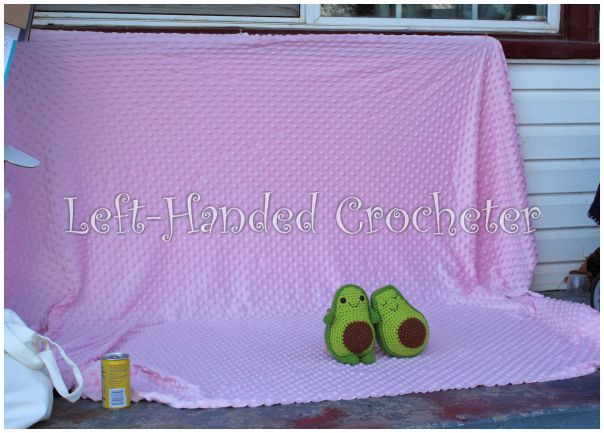
Cloudy days are the best for photos. If it’s not a cloudy day, find a place with some good shade. You don’t want deep shade because you still want the natural lighting, but you also don’t want bright sunlight behind your subject. Personally, I use my front porch. It faces north, and I’m in the Pacific Northwest so the sun is always behind my house, which puts my porch in the shade.

IMG_1500

I buy yards of fabric at Joann’s to use for backdrops, and I tack them to my window frame. This works really well for me, and I’m generally happy with how my pictures turn out.

IMG_1378

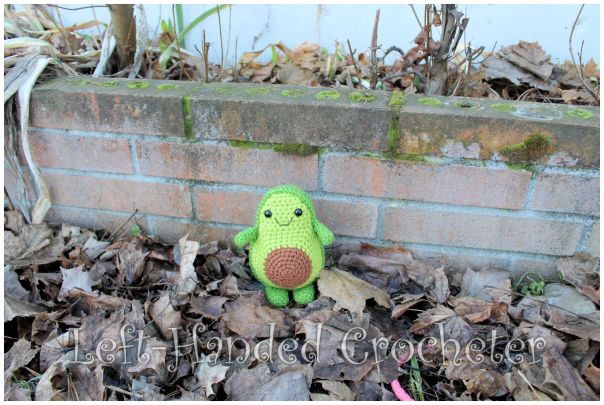
If you don’t have a good area you can set up a backdrop, there are lots of other options. Find a relatively uncluttered background (a wooden fence, bricks, etc) to set your item in front of.

DO frame your picture correctly.

When you’re photographing your item, you don’t want to stand above it (unless you’re trying to get it from an unusual angle), and you don’t want to be too far away from it.

IMG_1506

You want your item to fill as much of the picture as you can without cutting any of it off. It may mean kneeling on the ground, or even laying down to get that perfect photo.

IMG_1509

Sometimes, taking photos outdoors isn’t a great option. I know it’s tough for me in the winter months, or when it’s raining a lot, because it means I either have to brave the cold and wade through snow, or I need to bring an umbrella outside with me. Some people live in apartments with no real yard to speak of for setting up a space to take photographs. I know that it’s often a necessity to take photographs indoors. If this is the case for you, remember that natural lighting is always going to be best.

DON’T use a flash.

IMG_1517

One of the worst things you can do is to use an on-camera flash to take photographs of your handmade items. As with bright sunlight, it creates harsh shadows and washes other things out. It also changes the color quite a bit and overall just looks unflattering. If you must take photos inside, find a spot in your house that gets a lot of natural light (but not direct sunlight) to set up an area for photos.

DO work with what you have available.

I don’t have a single room in my house that gets good natural lighting because of the trees in our backyard. My kitchen is the best place, but the colors in there are terrible. Still, I use it occasionally if the item I’m photographing goes ok with the bright orange countertops.

IMG_1526

I try to work with what I have, and sometimes I’ll use my son’s house across the street because he has a north facing family room with lots of big windows that gets great lighting. You may need to play around with different areas in your house until you find that perfect spot, but I promise it will be worth it to get photographs that sell.

DO purchase professional lighting if you can afford it.

I’m a person who prefers natural lighting, and I’ve found ways to make it work for me. If you can afford it, and you’re willing to invest a bit of money, you can purchase lighting kits to help give you more natural lighting indoors. Here are a few examples on Amazon:

61VWQQTgaTL._SL1000_

This LED light panel is relatively inexpensive. If you have to take photographs indoors, it might be a good idea to consider getting something like this to make your items stand out better, and really show off what you’re selling.

61KazbOZmJL._SL1000_

If you have space to set up an area specifically for photographs, this continuous lighting kit with umbrella would be ideal, and would give you natural lighting in the darkest of rooms.

51kJgTeh7IL

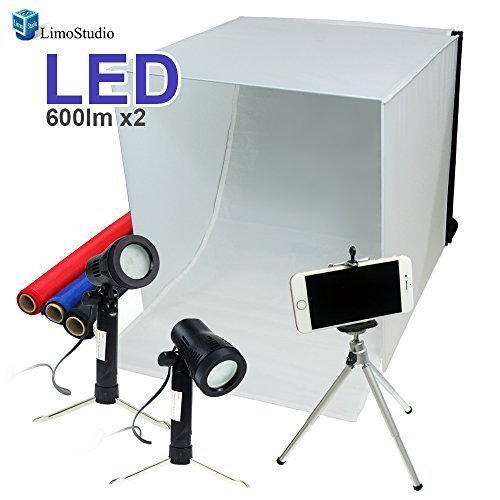
If the items that you’re photographing aren’t very big then this light box kit would be perfect. It gives you a nice background, plus lighting and some colored backgrounds. Since it’s only 16 cubic inches, though, it wouldn’t work well for most of the things that I make.

DO use nice backgrounds for your photographs.

It’s definitely a good investment to get a few different backgrounds that you like. As I said, I purchase yards of fabric from Joann’s and it works pretty well for me. I find that fleece fabrics are best for this because they don’t hold wrinkles as much as other fabrics do. Plus, you can get them in virtually any color.  I recommend you avoid most printed fabrics, because that will detract from your item that you’re trying to showcase. In some cases, though, printed backgrounds can make your items stand out more. I particularly love this set of wood designs that I purchased from Amazon.

91XoiGkhIhL._SL1500_

These are 4 foot by 12 foot rolls of paper that are designed to be put on a frame, but I just roll them out on my porch and use them. They look really nice with hats and scarves.

If you’re on a tight budget, posterboard works pretty well for backgrounds too, especially if the item you’re photographing isn’t too big.

DO show clothing items being worn.

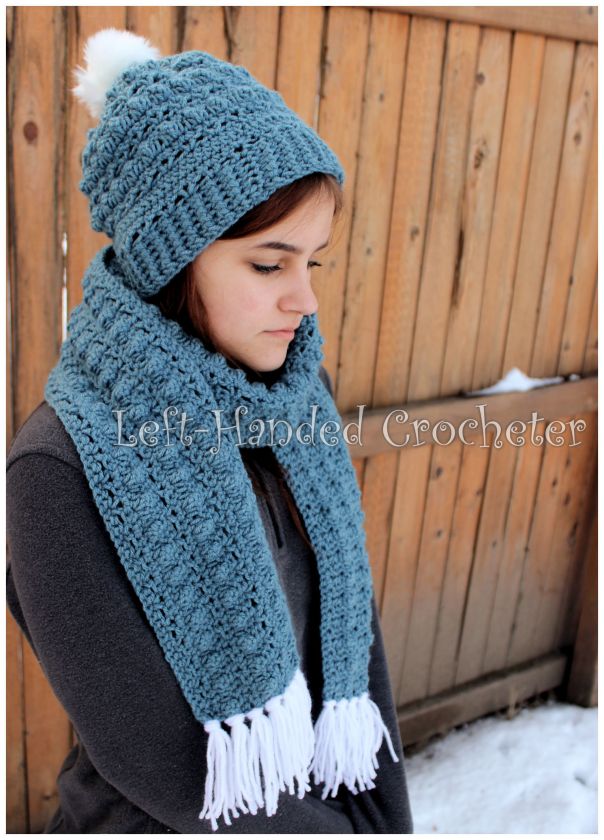
This is important if you make and sell hats and scarves, as well as other clothing items. Pictures of hats and scarves laying flat will help show off the pattern on them, but you really need to include photos of them being worn.

IMG_0493

Collage1

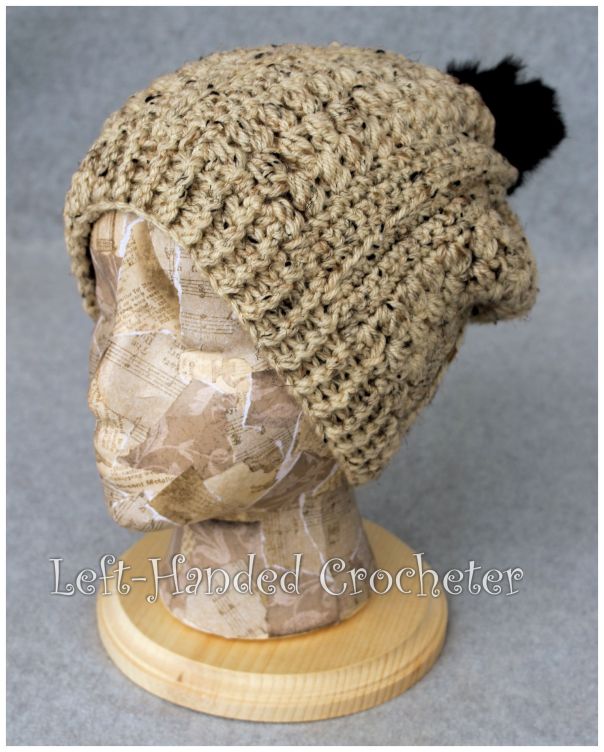
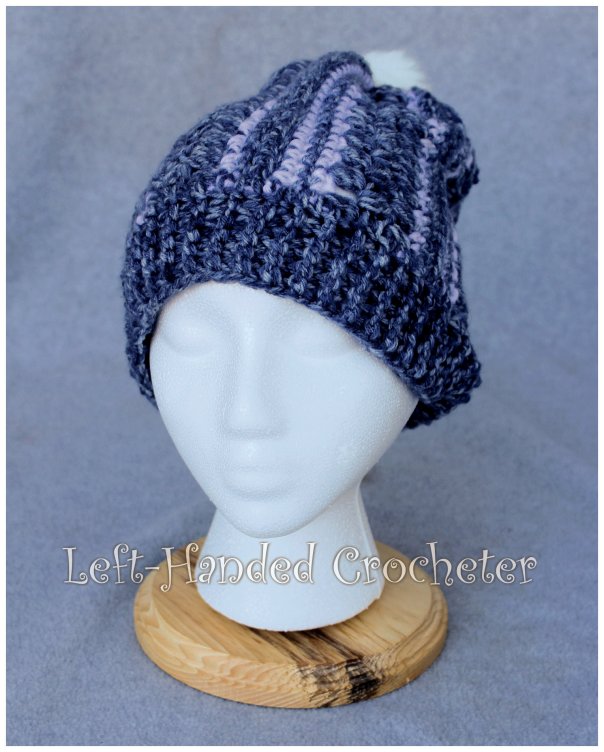
People want to see how a clothing item will look when it’s on them, since that’s why they’re buying it. If you don’t have a model handy, you can always pick up a styrofoam mannequin head. They’re pretty cheap and available at most craft stores.

IMG_0756

Be sure to check out my post about decorating those mannequin heads to make them stand out more.

DO use people in your photographs to show size.

11

IMG_8661a

Collage1a

Whenever possible, I try to get a photograph or two that has a person in the photo with the item. It helps give some perspective to how big or small it is. Even if you’re giving measurements, those numbers often don’t mean anything until you see it with somebody. Even just putting the item in somebody’s hands will give the purchaser an idea of how big it is.

10

DO edit your photographs.

One last bit of advice for the technical side of your photographs. You need to edit them. It’s so rare for a photograph to have perfect lighting straight out of your camera. On those rare occasions that I get a great photograph, I still open it and see if there are any edits I can do that will make it better. Even back in my days in the darkroom, there was still a lot of adjustments I had to make to get the perfect light and dark tones in my photographs.  Digital photography tends to look very flat, more so than film photography. You need to brighten up those photos, and deepen the shadows a bit to make them pop.

IMG_1503a

I have a really nice (and expensive) DSLR camera. It takes amazing photographs. But even so, I have to edit them. In the example above, you can see the difference editing made in the top photo (straight out of the camera) and the bottom photo (once it’s been edited). The lighting and color is so much better in the edited photograph. Next, I would crop that photograph and resize it a bit for sharing.

Most people know all about Photoshop. It really is the best photo editing software out there, because there’s so much you can do with it. However, Photoshop is a very expensive program and it can be complicated for the novice photographer. (Just a side note: most colleges have Photoshop classes you can take to learn how to use the program, but just the fact that they can fill that much time with learning it should tell you how complicated the program can be.)  I’ve taken Photoshop classes, and I’ve used the program for some things, but I actually learned how to edit (and manipulate) photos using Paintshop Pro. It’s a less expensive program, and kind of a simplified version of Photoshop. Paintshop Pro is always open on my computer because I use it for everything. It’s my favorite program, and one that I’ve spent the money to upgrade every time they come out with a new version.

I know spending money on photo editing software may not be in your budget. I’m sure there are a lot of free programs out there that you can get that will at least help you adjust the lighting on your photographs. I also know that many people don’t have a camera, or even a computer anymore. Most people simply use their cell phones. With the cameras on cell phones getting better and better, there’s absolutely nothing wrong with it being your main tool for photos. You can get really good photographs with a cell phone, and there are tons of apps out there that you can download (usually free of charge) to edit those photos.

3ab

My cell phone takes pretty good pictures, but I still love taking them into Instagram and adjusting the brightness and contrast, and sometimes adding a filter to make them look a bit better. I find this fun, and often will do it just for enjoyment. If you don’t enjoy editing photos, Instagram really is a great way for you to do it because they take most of the work out of it for you.

One last thing….

DO add a watermark to your photographs.

I find this to be very important because there are a lot of people out there who don’t want to put the time and effort into taking photographs of their own work, so they’ll just steal your photos and use them like they’re their own. (Side note: If you’ve ever done this, stop right now. It’s actually illegal to use somebody else’s photographs without their permission, and it’s a pretty asshole-ish thing to do. People put a lot of work into those photographs. DO NOT STEAL OTHER PEOPLE’S PHOTOS. Use my advice and take your own.)

Your photographs are less likely to get stolen if they’ve got a watermark on them. People don’t want their buyers to know that the work they’re viewing isn’t what they’re buying, so if they’re going to steal a photo they’ll look for one without a watermark on it. Think of it as signing your artwork. You wouldn’t sell a painting without putting your signature on it, would you? Of course not. You want to make sure you always gets credit for your work.

I use Paintshop Pro to put my watermark on my photos, but there are probably free apps you can find on your phone that will allow you to do it. Take some time and search for those apps. It will help protect your work, but it also adds a bit of professionalism to your photographs.

I think that’s everything I wanted to say about taking photographs of your work. Hopefully this post wasn’t too scattered or too long-winded, and I really hope you were able to take some of this advice and use it to help advance your business. If you have any other tips that you think of, or if you know some great free apps for editing photos on phones and adding watermarks, leave me a comment or go post on my Facebook page.

Crochet Yourself an Avocado Friend

IMG_1360

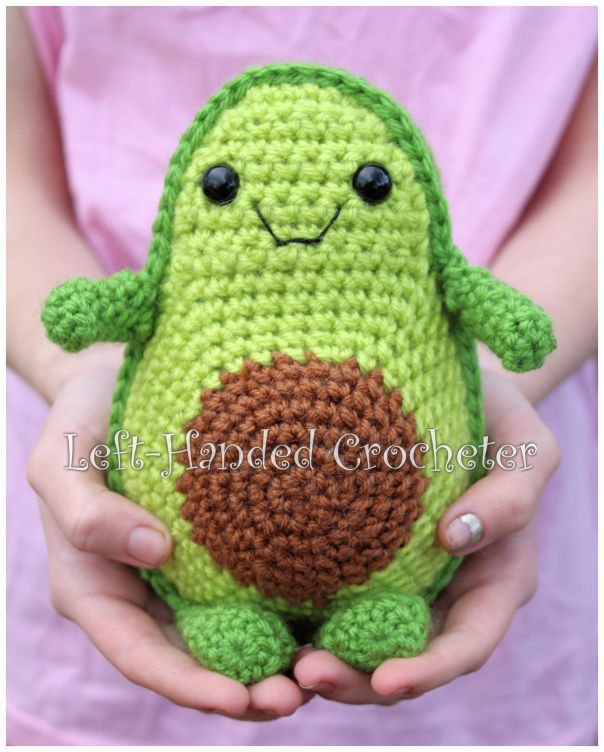
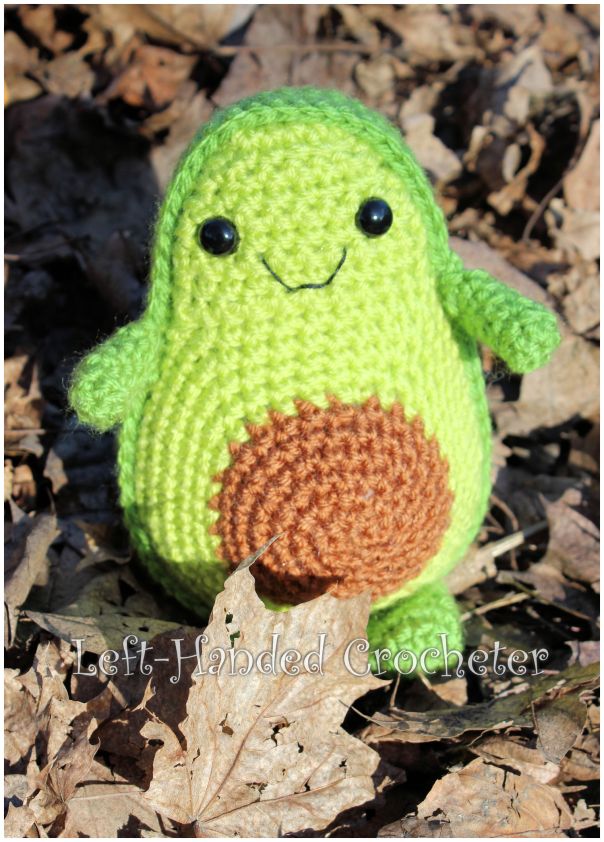
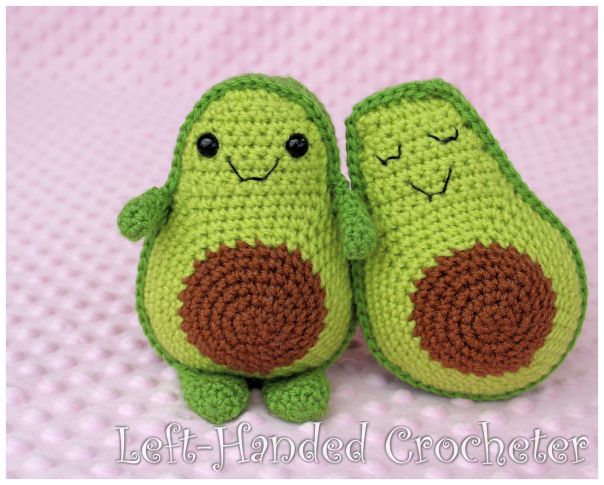
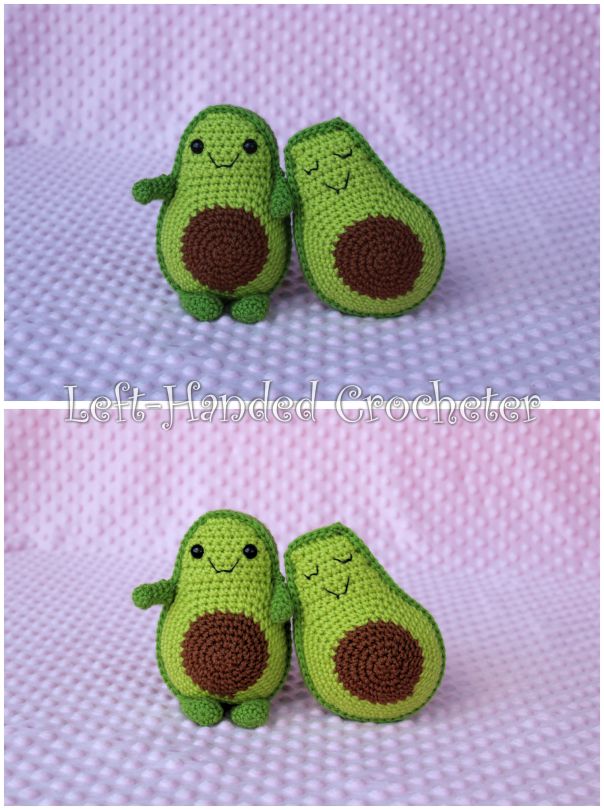
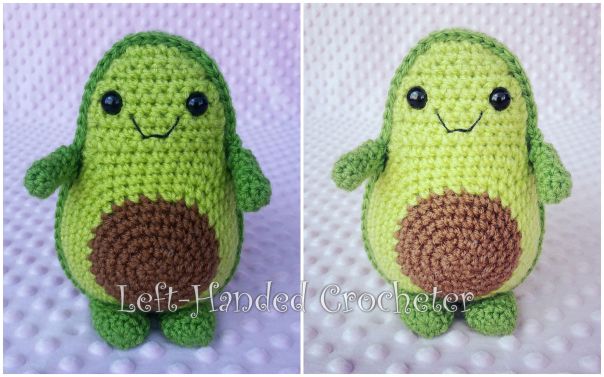
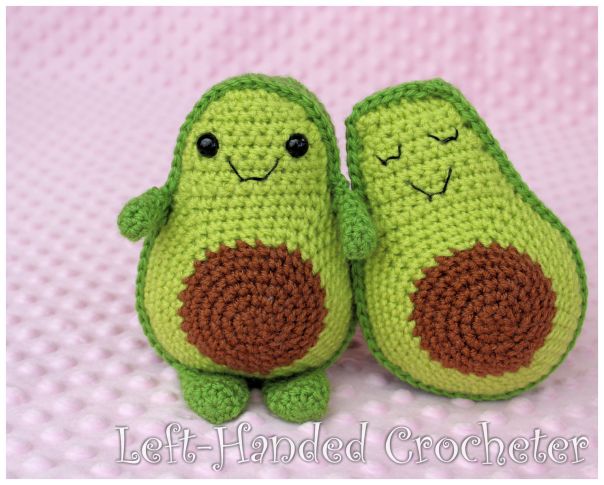
Have you heard? Avocados are a super food. They’re super healthy and super yummy. You won’t want to eat these avocados, though, but they are super cute and super cuddly.

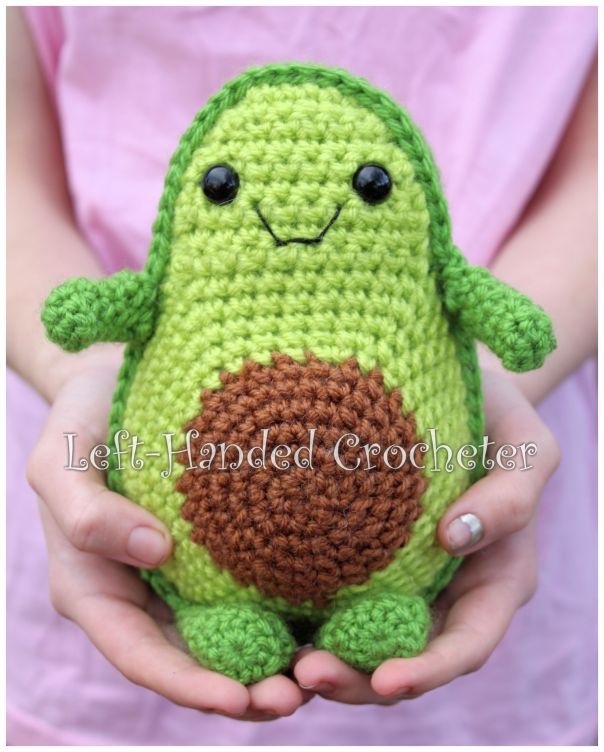
This pattern works up really quickly, and doesn’t take much yarn to make. The finished avocado stands about 7 inches tall. Make a couple for all of the avocado-lovers in your life.

IMG_1362

If you want a pattern that you can save on your computer and easily print, this pattern is available in my Ravelry shop for only $2.00. I love printing patterns and saving them in a binder to keep track of the ones I’ve done and the ones I still plan to do.

Abbreviations:

ch: chain

sc: single crochet

sl st: slip stitch


inc: increase (2 single crochets in one loop)

dec: decrease (pull yarn through loop, pull yarn through second loop, yarn over and pull through all loops)

Materials needed (with affiliate links):

Lion Brand Vanna’s Choice yarn in ferntoffee, and radiant lime.

I (5.25mm) crochet hook

12mm safety eyes

Yarn needle

Poly-fil 

Black embroidery thread

This pattern is worked “in-the-round”, and stitches are worked through both loops unless otherwise noted. 

Front

With toffee, ch 3. Sl st to first ch to create circle. (Instead, you can perform the “magic circle” if you’d like.)

Row 1: Ch 1, 5 sc inside of circle. (5 stitches)

Row 2: Inc in each stitch around. (10 stitches)

Row 3: *Inc in first stitch, sc in next stitch, repeat from * around. (15 stitches)

Row 4: *Inc in first stitch, sc in next 2 stitches, repeat from * around. (20 stitches)

Row 5: *Inc in first stitch, sc in next 3 stitches, repeat from * around. (25 stitches)

Rows 6-7: Sc in each stitch around. (25 stitches)

Switch to radiant lime.

Row 8: *Inc in first stitch, sc in next 4 stitches, repeat from * around. (30 stitches)

Row 9:  *Inc in first stitch, sc in next 5 stitches, repeat from * around. (35 stitches)

Row 10: *Inc in first stitch, sc in next 6 stitches, repeat from * around. (40 stitches)

Row 11: *Inc in first stitch, sc in next 7 stitches, repeat from * around. (45 stitches)

Row 12: *Inc in first stitch, sc in next 8 stitches, repeat from * around. (50 stitches)

Tie off.

IMG_1318

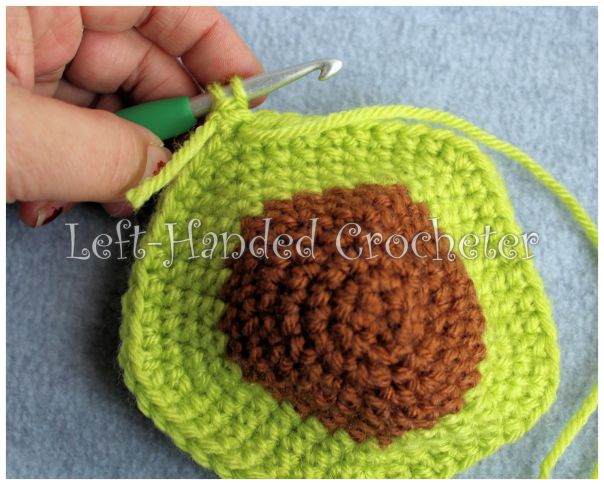
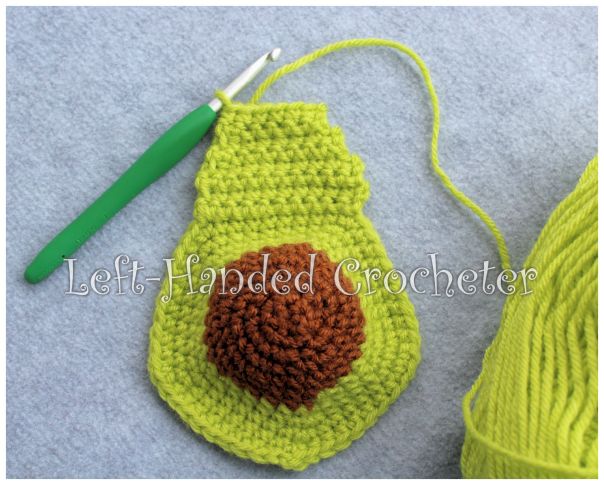
Your piece won’t be round, it should have 5 sides to it like the photo above. With radiant lime, slip stitch into the end of one of those sides.

IMG_1322

Row 1: Sc in first 10 stitches, ch 1, turn. (10 stitches)

IMG_1324

Rows 2-4: Sc in each stitch across, ch 1, turn. (10 stitches)

Row 5: Dec in first 2 stitches, sc in next 6 stitches, dec in last 2 stitches, ch 1, turn. (8 stitches)

Row 6: Sc in each stitch across, ch 1, turn. (8 stitches)

Row 7: Dec in first 2 stitches, sc in next 4 stitches, dec in last 2 stitches, ch 1, turn. (6 stitches)

Row 8: Sc in each stitch across, ch 1, turn. (6 stitches)

IMG_1328

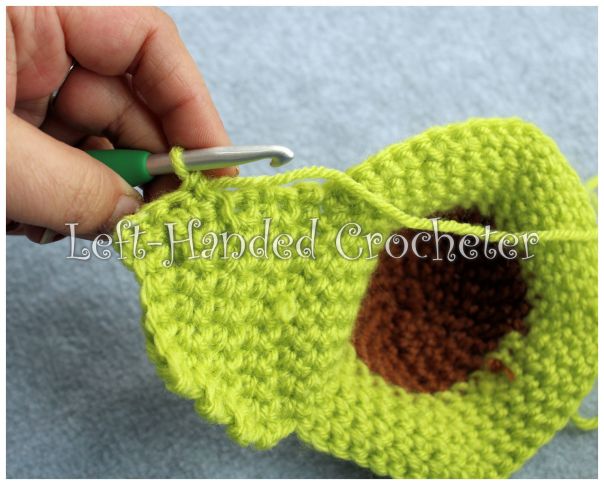
Work 65 sc’s around the whole thing.

IMG_1330

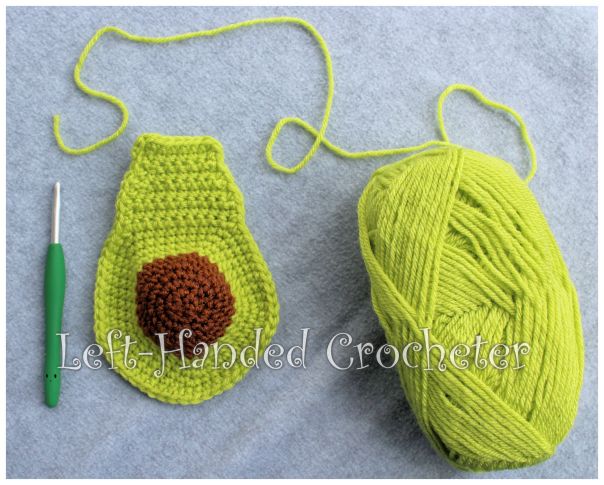
Sl st to first stitch. Tie off.

IMG_1333

If you’re using safety eyes, you can attach them now and sew a mouth on with embroidery thread. If you’re stitching eyes on, you can wait until you’re finished to sew them on if you’d like.

Back

With fern, ch 3. Sl st to first ch to create circle. (Instead, you can perform the “magic circle” if you’d like.)

Row 1: Ch 1, 5 sc inside of circle. (5 stitches)

Row 2: Inc in each stitch around. (10 stitches)

Row 3: *Inc in first stitch, sc in next stitch, repeat from * around. (15 stitches)

Row 4: *Inc in first stitch, sc in next 2 stitches, repeat from * around. (20 stitches)

Row 5: *Inc in first stitch, sc in next 3 stitches, repeat from * around. (25 stitches)


Row 6: *Inc in first stitch, sc in next 4 stitches, repeat from * around. (30 stitches)

Row 7:  *Inc in first stitch, sc in next 5 stitches, repeat from * around. (35 stitches)

Row 8: *Inc in first stitch, sc in next 6 stitches, repeat from * around. (40 stitches)

Row 9: *Inc in first stitch, sc in next 7 stitches, repeat from * around. (45 stitches)

Row 10: *Inc in first stitch, sc in next 8 stitches, repeat from * around. (50 stitches)

Tie off.

Sl st into one of the flat sides like you did for the front.

Row 1: Sc in first 10 stitches, ch 1, turn. (10 stitches)

Rows 2-4: Sc in each stitch across, ch 1, turn. (10 stitches)

Row 3: Dec in first 2 stitches, sc in next 6 stitches, dec in last 2 stitches, ch 1, turn. (8 stitches)

Row 4: Sc in each stitch across, ch 1, turn. (8 stitches)

Row 5: Dec in first 2 stitches, sc in next 4 stitches, dec in last 2 stitches, ch 1, turn. (6 stitches)

Row 6: Sc in each stitch across, ch 1, turn. (6 stitches)

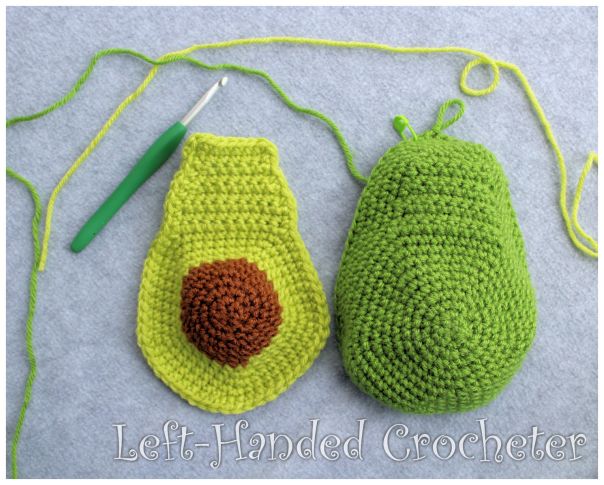
Work 65 sc’s around the whole thing. Repeat this 3 times to create a “bowl” shape. You can make your avocado wider by working more rows around the back piece, or make it slimmer by working less rows around.

IMG_1336

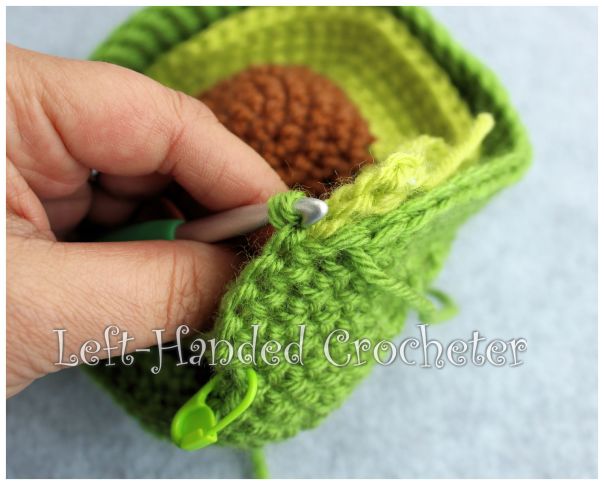
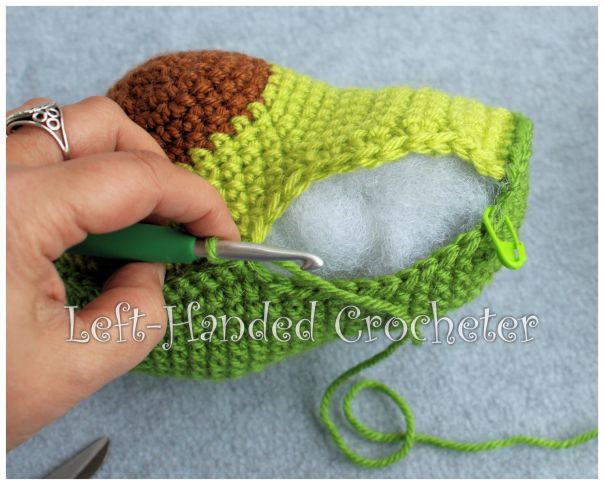
Holding the 2 pieces together, sc around.

IMG_1341

Before you close it up, stuff tight with poly-fil.

IMG_1348

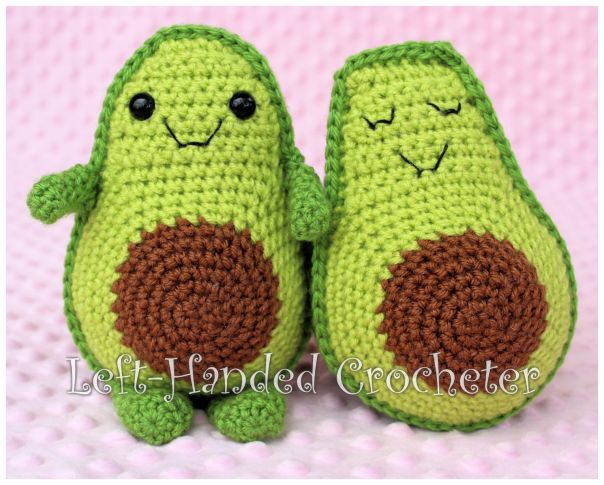
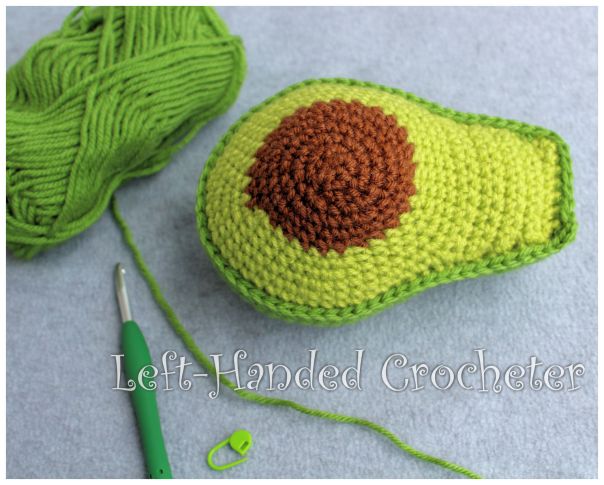
You could leave your avocado like this if you’d like.

IMG_1352

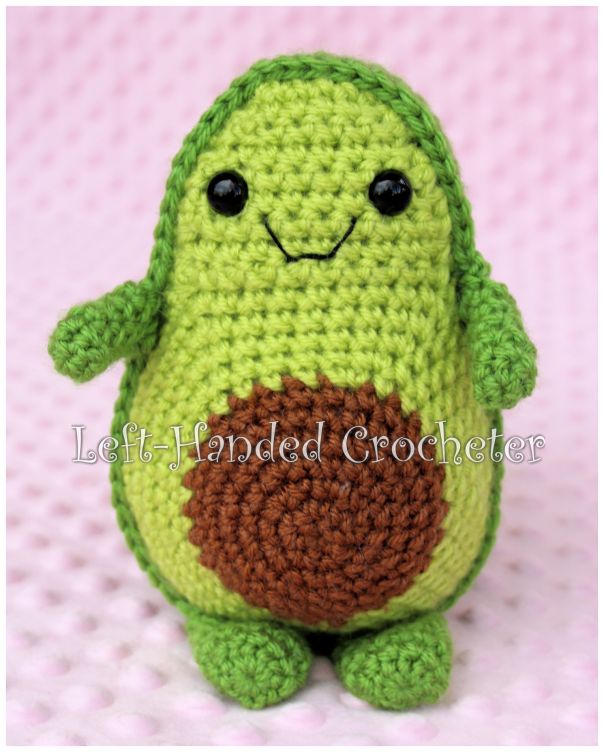
Or put a face on it and attach some arms and legs.

IMG_1369

Arms

With fern, ch 3. Sl st to first ch to create circle. (Instead, you can perform the “magic circle” if you’d like.)

Row 1: Ch 1, 6 sc inside of circle. (6 stitches)

Rows 2-5: Sc in each stitch around. (6 stitches)

Tie off. Sew onto sides of avocado.

Legs

With fern, ch 3. Sl st to first ch to create circle. (Instead, you can perform the “magic circle” if you’d like.)

Row 1: Ch 1, 10 sc inside of circle. (10 stitches)

Rows 2-6: Sc in each stitch around. (10 stitches)

Tie off. Sew onto bottom of avocado.

IMG_1378

I hope you enjoy this pattern! You’re welcome to sell items that you make using my patterns, as long as you don’t post the pattern anywhere else, and link back to my page if you’d like to. If there are any mistakes, or something is unclear, please feel free to leave me a comment and let me know. Or message me on Facebook. If you create any avocados of your own, be sure to post a photo on my Facebook page so I can see. I love seeing all of the things people are creating, and I’d love to see the different variations that people make of these.
 

Valentine Roundup

Collage1

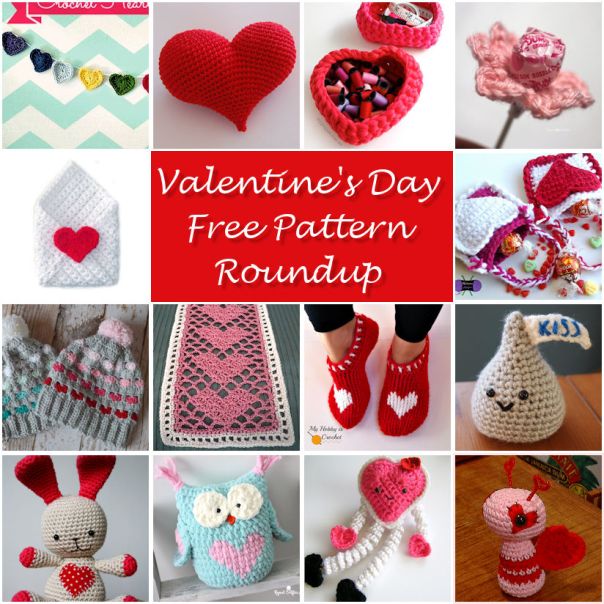
Valentine’s Day is right around the corner. I found 14 fairly quick (and free!) Valentine patterns for anybody who wants to hand make some things for the holidays. Just click on the links to go check out these wonderful patterns.

crochet-hearts-garland

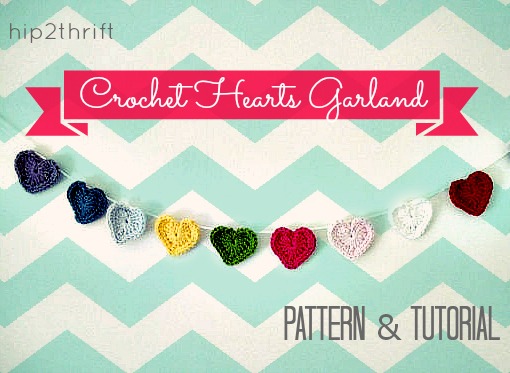
  1. Here’s a simple pattern for some heart appliques. These would be cute strung up as garlands, or you could make a bunch of them and let your kids glue them onto cards to make their own Valentines.

3269731042_ec05b3949c_z

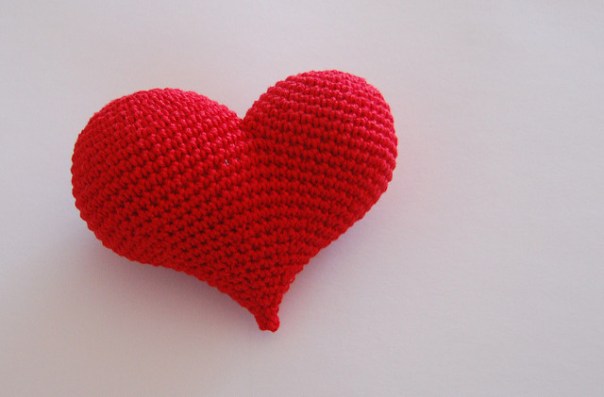
2. The pop heart pattern is so unique because the heart actually has 2 different sized cups and a pointy end. It’s a neat take on a plus heart, and could be given on its own as a gift, or sewn into the arms of a stuffed animal.

heart-shape-crocheted-baskets-storage

3. These heart-shaped baskets are made with t-shirt yarn, but I’m sure they could be made with any type of yarn and would turn out just as cute. They would make great decor for Valentine’s Day, or just put them around your house all year to hold little odds and ends.

DumDumDaisy2-728x870

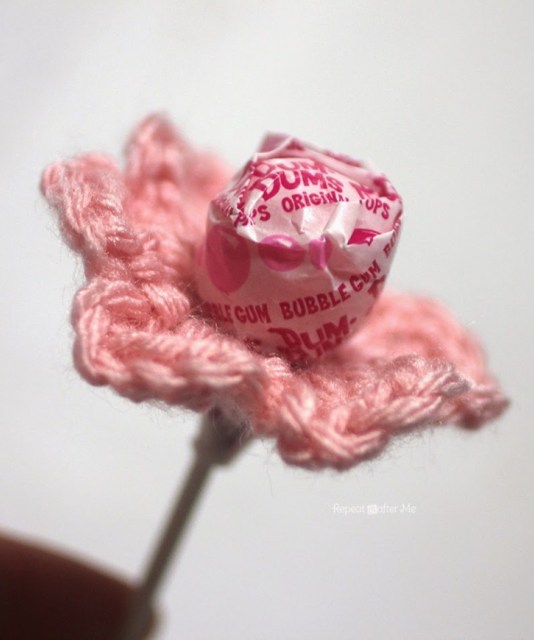
4. These daisy dum-dums are one of my favorite ideas for Valentine’s Day. My kids aren’t little anymore, but I would have loved making these for their classmates. Since dum-dums are fairly cheap, and these could be made with scraps of yarn, it’s an inexpensive way to make sure your kid’s Valentines stand out this year.

envelope

5. Here’s another cute idea. This heart envelope would be great for those special Valentines. Stick a note inside, or maybe a treat or two, and hand them out to those you love.

VdayGiftBag1.jpg

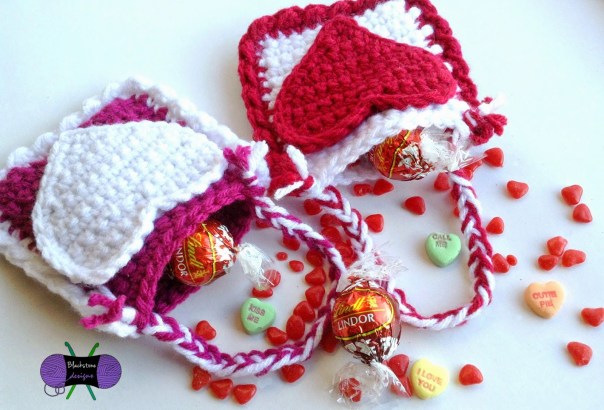
6. These cute mini treat bags wouldn’t take much time to make, and will hold all of those Valentine treats. You could even stuff a little note or card inside of them.

puppyloveheartslouchy2WM-600x399

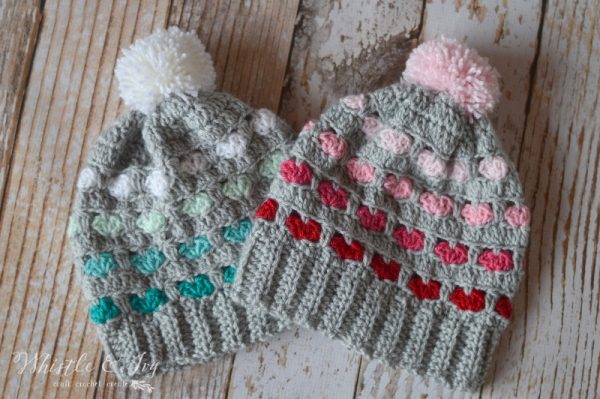
7. Want something special to wear on Valentine’s Day? The Puppy Love Heart Slouchy Hat is one of my favorite patterns. It would be great to wear all winter, but especially during February.

SWEETHEART_LACE_SCARF_cropped_medium2

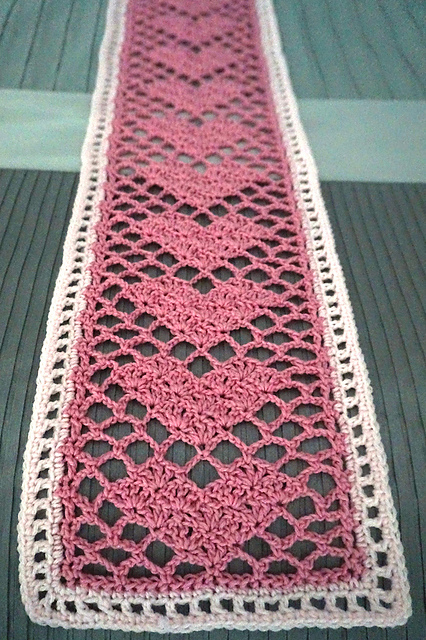
8. This sweetheart lace scarf is so pretty and elegant. I think it would also make a great table runner to set up for a romantic night in.

heart graph women crochet slippers

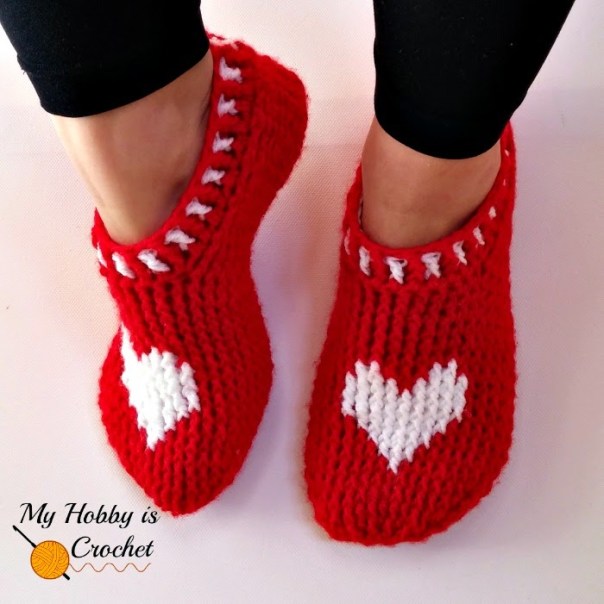
9. These heart and sole slippers look so warm and cozy. They would make a great gift for somebody special, or crochet up a pair to wear while you sit and work on other projects.

P1253133_medium2

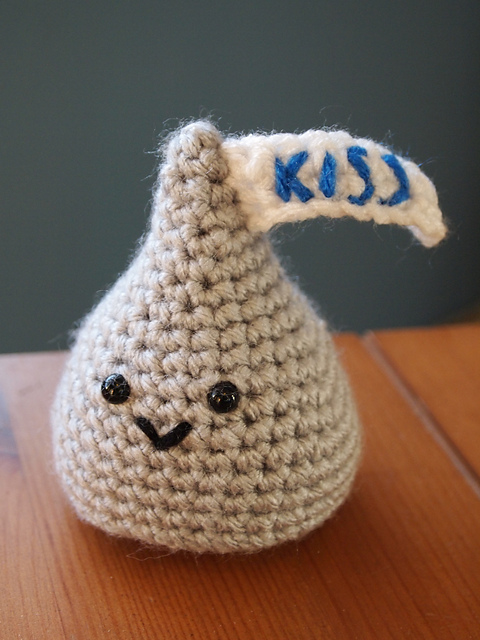
10. This plush Hershey kiss is so adorable. It looks like it would work up pretty quickly, and wouldn’t take much yarn to make.

b946dca05e18764210ae33f83d1b49fa

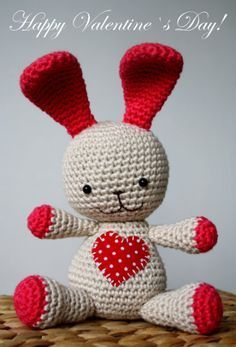
11. This funny bunny pattern is so cute. It would be great for any time of the year, especially if you just change up some of the colors.

ValentineOwl2

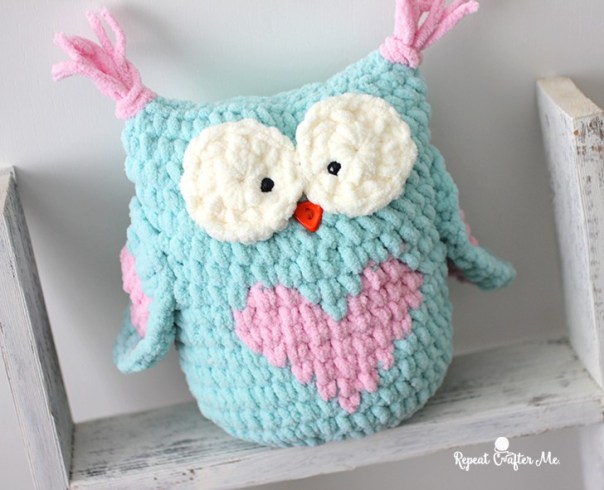
12. This Valentine heart owl looks so soft and squishy. I love blanket yarn because it makes such nice stuffies, but I also have a things for owls. The hearts make him extra cute.

new heart

13. Miss Lovey looks so fun and cute. I can picture my grandkids hugging her and throwing her around.

000et6bp_medium

14. Want to make a love bug for your love bug? This pattern is quick and easy and is free on Ravelry.

I hope you found something fun to make for Valentine’s Day! I know there are a couple of patterns on here that I’m adding to my “to do” list. If you find any other fun Valentine’s Day patterns, go leave a link on my Facebook page so I can check it out!


Val the Valentine Girl

IMG_1018

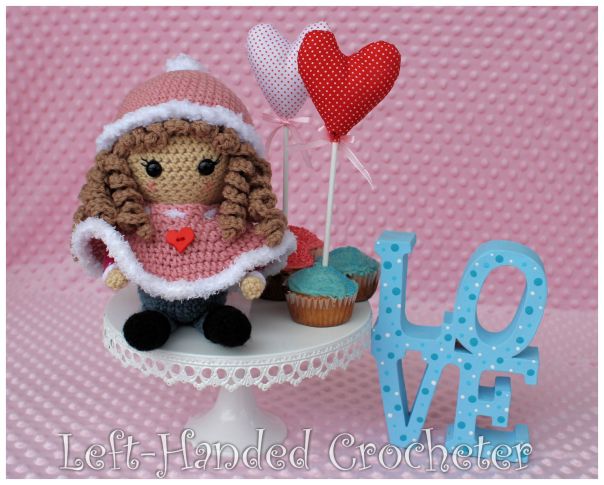
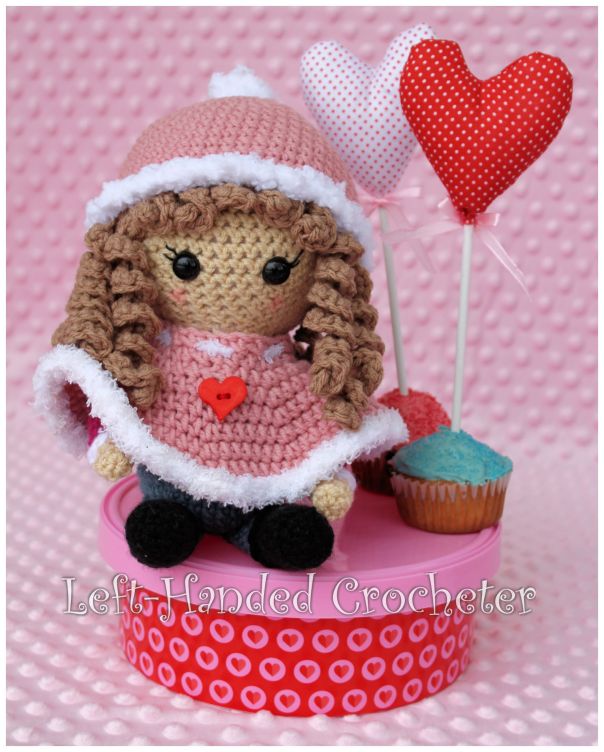
Val has made some cupcakes, and she’s all ready for Valentine’s Day.  This finished doll stands about 10.5 inches tall and makes a cute Valentine’s decoration, or a toy for little hands to play with.

If you want a pattern that you can save on your computer and easily print, this pattern is available in my Ravelry shop for only $2.00. I love printing patterns and saving them in a binder to keep track of the ones I’ve done and the ones I still plan to do.

IMG_1053

Abbreviations:

ch: chain

sc: single crochet

sl st: slip stitch

dc: double crochet

hdc: half double crochet

trc: triple crochet

inc: increase (2 single crochets in one loop)

dec: decrease (pull yarn through loop, pull yarn through second loop, yarn over and pull through all loops)

Materials needed (with affiliate links):

Lion Brand Vanna’s Choice yarn in beigewhiteblack, and dusty blue. Loops and Threads Impeccable yarn in soft rose, rich orchid and soft taupe. A small amount of Bernat Pipsqueak yarn in white. (You can choose any colors you want, of course, but these are the ones that I used.)

I (5.25mm) crochet hook

15mm safety eyes

Yarn needle

Poly-fil 

Heart-shaped button and 2 small white buttons(optional)

Pipe Cleaners (optional)

This pattern is worked “in-the-round”, and stitches are worked through both loops unless otherwise noted. 

Hat:

With soft rose, ch 3. Sl st to first ch to create circle. (Instead, you can perform the “magic circle” if you’d like.)

Row 1: ch 1, 10 sc inside of circle. (10 stitches)

Row 2: *Inc in first stitch, sc in next stitch, repeat from * around. (15 stitches)

Row 3: *Inc in first stitch, sc in next 2 stitches, repeat from * around. (20 stitches)

Row 4: *Inc in first stitch, sc in next 3 stitches, repeat from * around. (25 stitches)

Row 5: *Inc in first stitch, sc in next 4 stitches, repeat from * around. (30 stitches)

Row 6: *Inc in first stitch, sc in next 5 stitches, repeat from * around. (35 stitches)

Row 7: *Inc in first stitch, sc in next 6 stitches, repeat from * around. (40 stitches)

Row 8: *Inc in first stitch, sc in next 7 stitches, repeat from * around. (45 stitches)

Row 9: *Inc in first stitch, sc in next 8 stitches, repeat from * around. (50 stitches)

Rows 10-17: Sc in each stitch around. (50 stitches)

Switch to Pipsqueak yarn.

Row 18: Sc in each stitch around. (50 stitches)

Tie off.

Make a pom-pom with the Pipsqueak yarn and attach to top of hat.

Head:

With beige, ch 3. Sl st to first ch to create circle. (Instead, you can perform the “magic circle” if you’d like.)

Row 1: ch 1, 10 sc inside of circle. (10 stitches)

Row 2: *Inc in first stitch, sc in next stitch, repeat from * around. (15 stitches)

Row 3: *Inc in first stitch, sc in next 2 stitches, repeat from * around. (20 stitches)

Row 4: *Inc in first stitch, sc in next 3 stitches, repeat from * around. (25 stitches)

Row 5: *Inc in first stitch, sc in next 4 stitches, repeat from * around. (30 stitches)

Row 6: *Inc in first stitch, sc in next 5 stitches, repeat from * around. (35 stitches)

Row 7: *Inc in first stitch, sc in next 6 stitches, repeat from * around. (40 stitches)

Row 8: *Inc in first stitch, sc in next 7 stitches, repeat from * around. (45 stitches)

Row 9: *Inc in first stitch, sc in next 8 stitches, repeat from * around. (50 stitches)

Rows 10-15: Sc in each stitch around. (50 stitches)

Row 16: *Dec in first 2 stitches, sc in next 8 stitches, repeat from * around. (45 stitches)

Row 17: *Dec in first 2 stitches, sc in next 7 stitches, repeat from * around. (40 stitches)

Row 18: *Dec in first 2 stitches, sc in next 6 stitches, repeat from * around. (35 stitches)

Row 19: *Dec in first 2 stitches, sc in next 5 stitches, repeat from * around. (30 stitches)

Row 20: *Dec in first 2 stitches, sc in next 4 stitches, repeat from * around. (25 stitches)

Row 21: *Dec in first 2 stitches, sc in next 3 stitches, repeat from * around. (20 stitches)

Tie off. Stuff with poly-fil.

Curly Hair

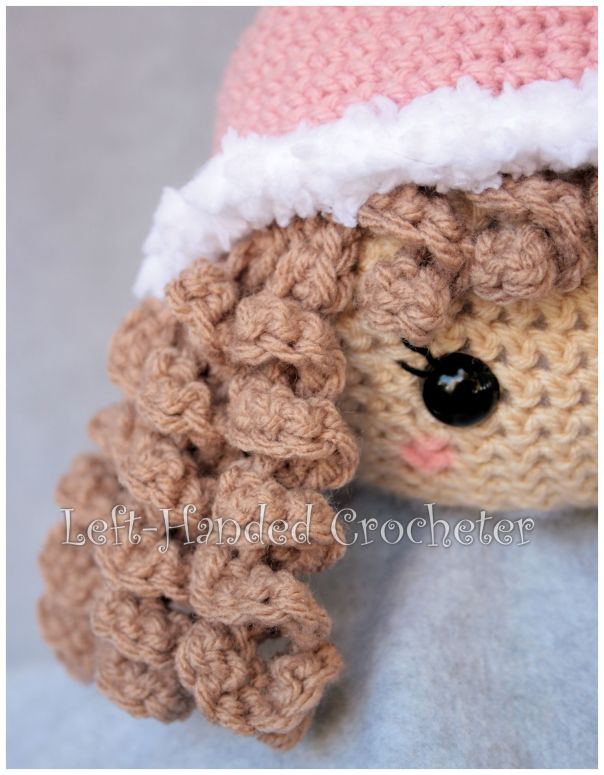
Using soft taupe, crochet a chain longer than you want the hair to be. Work 3 sc’s into each chain. Be sure to leave a long tail at the beginning and end of each curl to attach to her head.

IMG_1075

Play around with different starting chains until you get the lengths that you want.

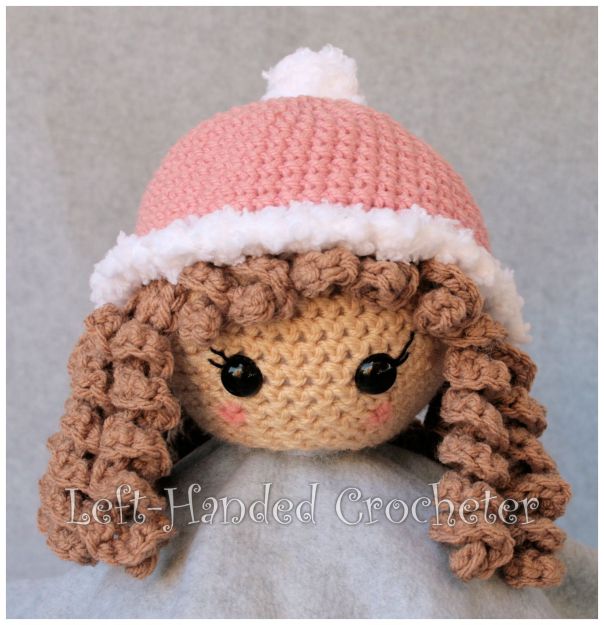
Pull hat onto head and get it where you want it. Figure out the placement of her eyes, but don’t put the backs on yet. Sew hat onto head, then attach hair underneath hat so that it falls over the loops.

IMG_1058

Use the long tails to tie each curl in place. If you want eyelashes, be sure to sew them on before you put the eyes in place. Once you have the hat and hair on, make sure the eye placement is where you want it, and attach the backs. You can sew on a nose and/or mouth if you want to,  but I always choose to leave those off because it makes her expression more neutral. You can also use a bit of blush on her cheeks to give her face some color.

IMG_1990

IMG_1989

Body:

With dusty blue, ch 3. Sl st to first ch to create circle. (Instead, you can perform the “magic circle” if you’d like.)

Row 1: ch 1, 10 sc inside of circle. (10 stitches)

Row 2: *Inc in first stitch, sc in next stitch, repeat from * around. (15 stitches)

Row 3: *Inc in first stitch, sc in next 2 stitches, repeat from * around. (20 stitches)

Row 4: *Inc in first stitch, sc in next 3 stitches, repeat from * around. (25 stitches)

Row 5: *Inc in first stitch, sc in next 4 stitches, repeat from * around. (30 stitches)

Row 6: *Inc in first stitch, sc in next 5 stitches, repeat from * around. (35 stitches)

Row 7: *Dec in first 2 stitches, sc in next 5 stitches, repeat from * around. (30 stitches)

Switch to white.

Row 8: Sc in each stitch around. (30 stitches)

Switch to rich orchid.

Rows 9-11: Sc in each stitch around. (30 stitches)

Row 12: *Dec in first 2 stitches, sc in next 4 stitches, repeat from * around. (25 stitches)

Rows 13-15: Sc in each stitch around. (25 stitches)

Switch to white.

Row 16: *Dec in first 2 stitches, sc in next 3 stitches, repeat from * around. (20 stitches)

Switch to beige.

Row 16: Sc in each stitch around. (20 stitches)

Tie off. Stuff with poly-fil. You can leave it as is, or you can attach white on the bottom of her shirt and sc around twice to create the bottom cuff of her shirt. Attach small buttons onto her shirt if you want to. Sew head onto body.

IMG_1055

Arms:

With beige, ch 3. Sl st to first ch to create circle. (Instead, you can perform the “magic circle” if you’d like.)

Row 1: ch 1, 6 sc inside of circle. (6 stitches)

Rows 2-3: Sc in each stitch around. (6 stitches)

Switch to white.

Row 4: Sc in each stitch around. (6 stitches)

Rows 5-14: Sc in each stitch around. (6 stitches)

Tie off. Do not stuff. You can insert pipe cleaners in the arms if you want them to be poseable. You can leave it as is, or you can attach white on the bottom of her sleeve and sc around once to create the cuff of her shirt. Sew onto body.

Legs:

With black, ch 3. Sl st to first ch to create circle. (Instead, you can perform the “magic circle” if you’d like.)

Row 1: ch 1, 10 sc inside of circle. (10 stitches)

Rows 2-8: Sc in each stitch around. (10 stitches)

Switch to dusty blue.

Rows 9-15: Sc in each stitch around. (10 stitches)

Tie off. Stuff with poly-fil. You can leave it as is, or you can attach black on the top of her boots and sc around once to create the cuff of her boot. Sew onto body.


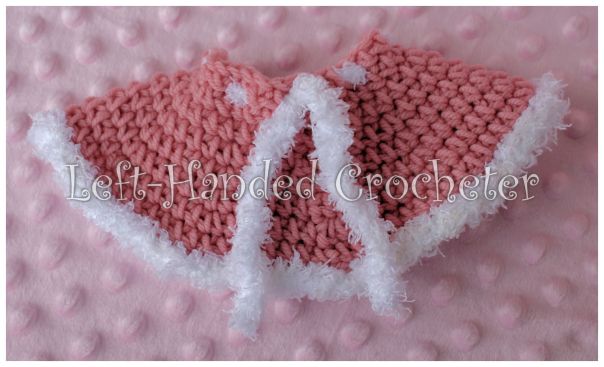
Poncho

With soft rose, ch 30. Sl st to first ch to form a ring.

Row 1: Hdc in each ch around. (30 stitches)

Row 2: *Hdc inc in first stitch, hdc in next 5 stitches, repeat from * around. (35 stitches)

Row 3: *Hdc inc in first stitch, hdc in next 6 stitches, repeat from * around. (40 stitches)

Row 4: *Hdc inc in first stitch, hdc in next 3 stitches, repeat from * around. (50 stitches)

Row 5: *Hdc inc in first stitch, hdc in next 4 stitches, repeat from * around. (55 stitches)

Row 6: *Hdc inc in first stitch, hdc in next 5 stitches, repeat from * around. (60 stitches)

Row 7: *Hdc inc in first stitch, hdc in next 6 stitches, repeat from * around. (65 stitches)

Row 8: Hdc in each stitch around. (65 stitches)

Switch to Pipsqueak yarn.

Row 9: Sc in each stitch around. (65 stitches)

Tie off.

With Pipqueak yarn, ch. 50. Tie off. Weave chain into the top of the poncho to tighten it at the neck once it’s on.

IMG_1062

IMG_1065

And there you have you finished doll. Val looks very cute with her poncho on.

IMG_1040

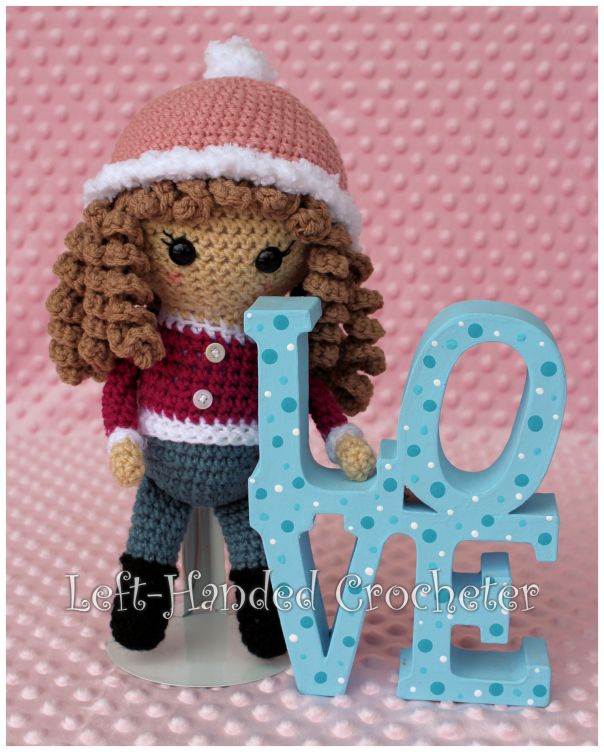
But she’s also very cute without her poncho.

IMG_1048

I hope you enjoy this pattern! You’re welcome to sell items that you make using my patterns, as long as you don’t post the pattern anywhere else, and link back to my page if you’d like to. If there are any mistakes, or something is unclear, please feel free to leave me a comment and let me know. Or message me on Facebook. If you create any dolls of your own, be sure to post a photo on my Facebook page so I can see. I love seeing all of the things people are creating, and I’d love to see the different variations that people make of these.
Decorating Mannequin Heads

If you make hats, then you probably know that the best way to display them is on mannequin heads. Whether you sell items at craft fairs, in a shop, or online, a simple foam mannequin head will help show your hats off.

IMG_0580

IMG_0584

Styrofoam mannequin heads are fairly inexpensive, but they’re also pretty boring. The other problem I have with them is, the white brightness of them can mess up a photograph, causing either your hat to end up too dark, or the mannequin head to be too bright and lose any features. If you want to spruce up those mannequin heads, it’s pretty easy to decoupage them.

IMG_0595

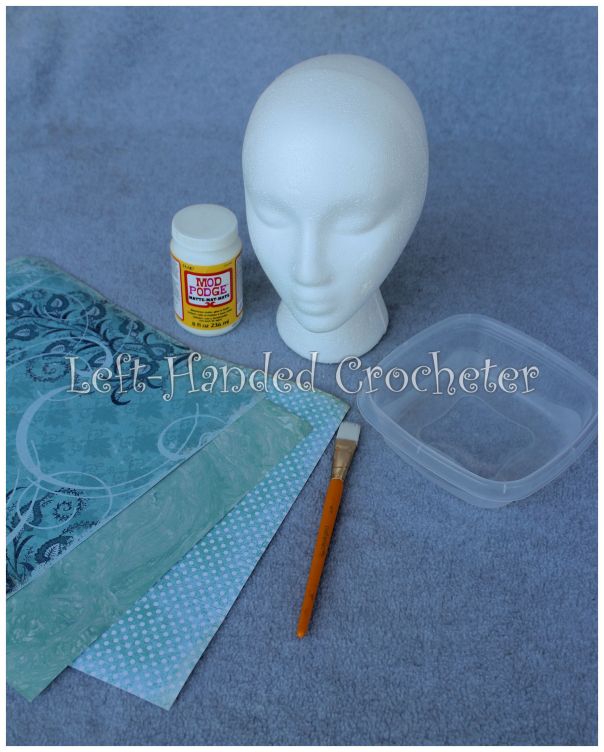
All you need is some scrapbook paper, Mod Podge (I prefer the matte finish), a paintbrush, and a container of water. Choose scrapbook paper with some simple designs, preferably in colors that won’t overpower your hats. I like choosing a few coordinating papers to mix things up a bit. I should also note that I tried this with a thicker scrapbook paper, and it didn’t work as well. The regular, thinner scrapbook paper works better for getting all of those curves.

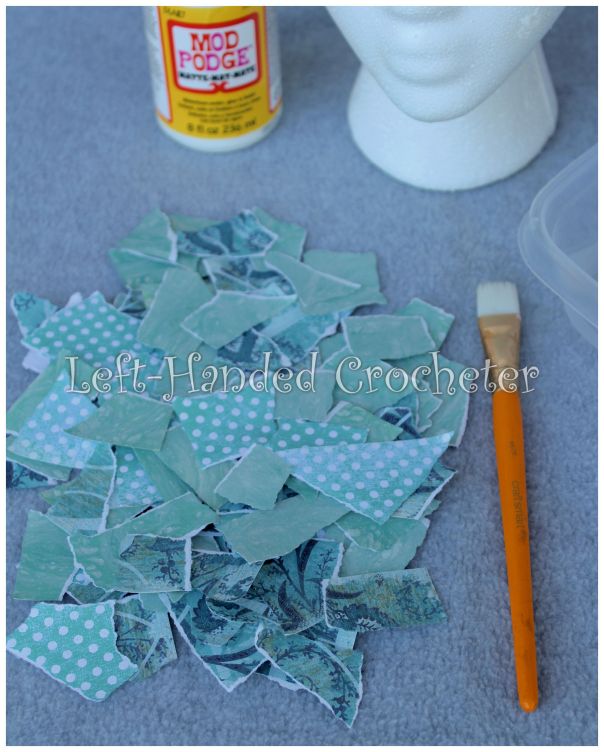
Tear the scrapbook paper into pieces. You could also use scissors and cut the paper, but I think it looks better torn into random pieces.

IMG_0606

Make sure you have small pieces, especially for around the eyes, nose and mouth.

IMG_0607

Put pieces of the paper into the container of water. You don’t have to leave them in very long, although leaving them in longer will make them more flexible.

IMG_0618

Dip your paintbrush into the Mod Podge and spread it on the mannequin head where you’re going to put your pieces. Lay the pieces on and use your fingers to smooth out any curves or creases. Go over the piece with more Mod Podge.

IMG_0625

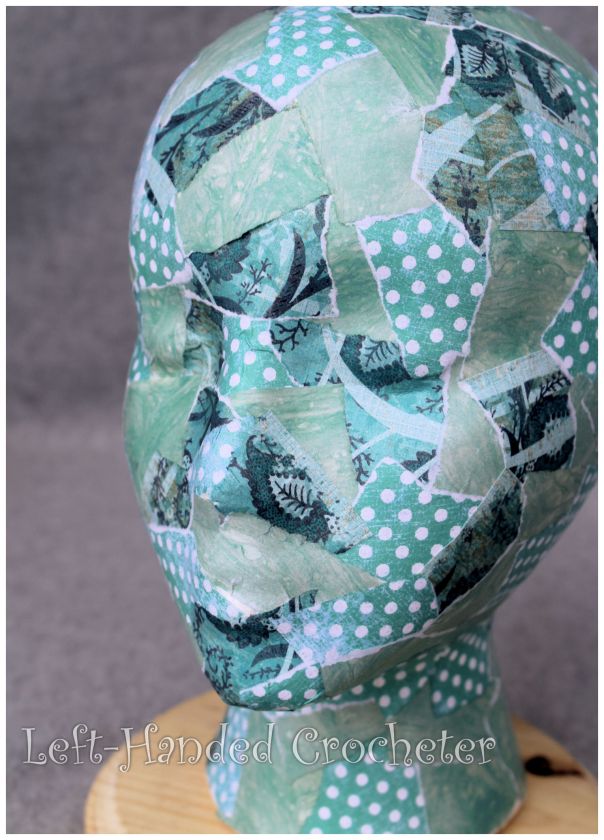
Continue doing this to cover the whole head. The hardest part is around the eyes, nose and mouth, but just use small pieces and be sure to smooth each of them out to form into the creases of the head.

IMG_0723

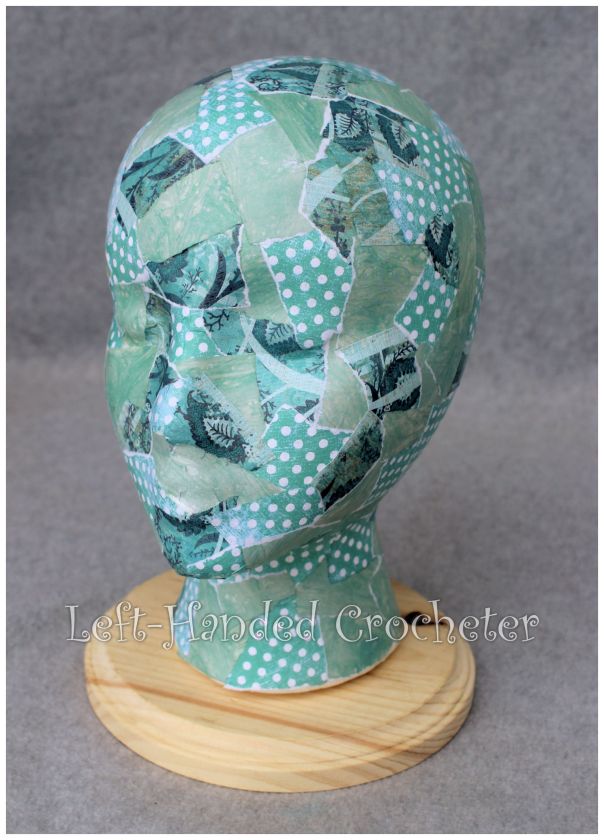
Once your mannequin head is completely covered, set it some place to dry. You can add another coat of Mod Podge over the top to seal it, or even use a spray sealer if you want to.

IMG_0722

I really like the way the hats look on decorated mannequin heads. It will make your product stand out from others, and it turns your mannequin head into a work of art.

IMG_0727

IMG_0729

IMG_0735

Try different colors of papers to go with different hats that you have.

IMG_0714

IMG_0716

I really like the way neutral tones work with most hats.

IMG_0754

IMG_0756

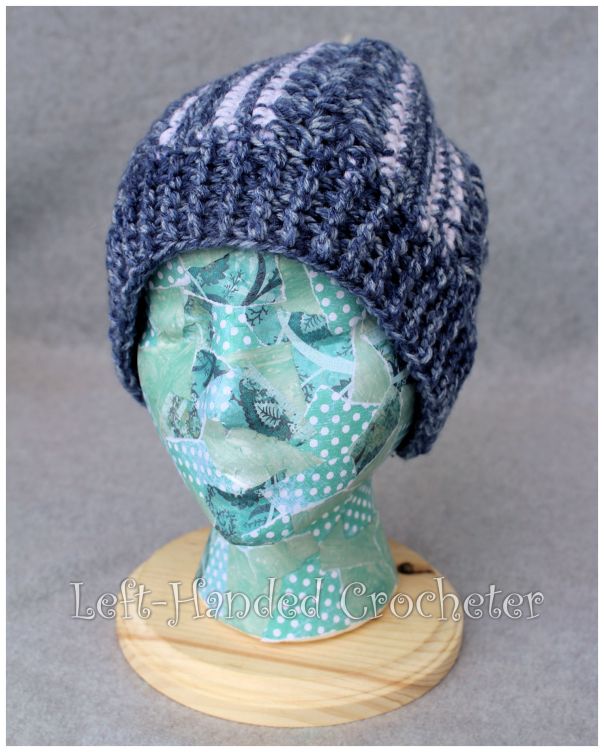
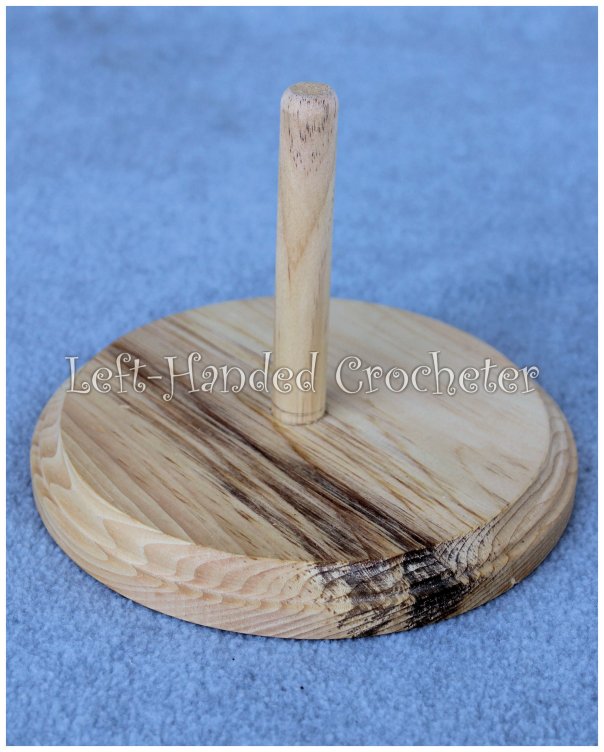
I also have to add, one of the biggest problem I’ve had with styrofoam mannequin heads is that they tip over pretty easily once you put a hat on them. Since they have a hole in the bottom of the head, my boyfriend made me some wooden bases using round plaques and wooden dowels.

IMG_0588

IMG_0586

They were pretty easy to make, too. He just measured and cut the dowels, then screwed them into the round plaque. He’s going to stain them for me too. I love them. They add a nice tough to my photographs and help keep the heads from falling over when I’m trying to take pictures.

I hope this post was helpful. If you decoupage any mannequin heads, go share a photo with me over on my Facebook. I’d love to see other colored ones, and different designs.


Kevin the Koala

IMG_0377

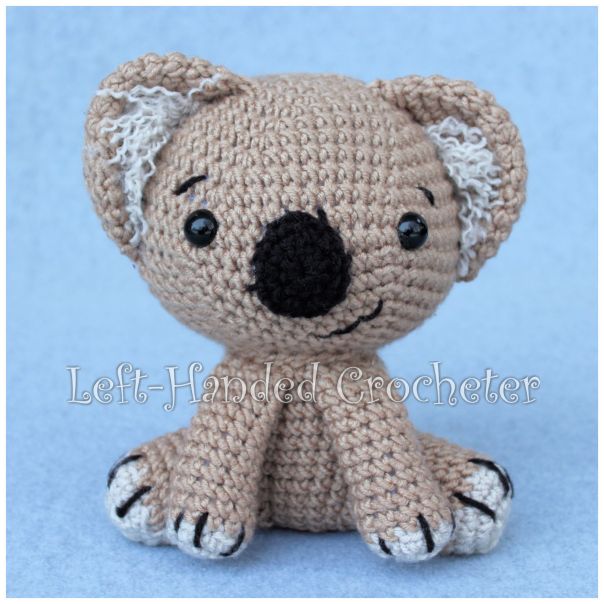
My middle daughter collects teddy bears, but she likes koalas the best. I decided I needed to make a koala for her.

I really like using Lion Brand Vanna’s Choice yarn for stuffies. It holds up well to being stuffed, and it’s a decent price. Plus there are so many color choices, which makes it easy to find what I’m looking for. Unfortunately, I couldn’t find the right color for my koala with the Vanna yarn, so I started looking at other brands. I found the perfect color in the Big Twist yarn, which is a Joann brand yarn. When finished, Kevin is about 8 inches tall and he’s cute as can be.

If you want a pattern that you can save on your computer and easily print, this pattern is available in my Ravelry shop for only $2.00. I love printing patterns and saving them in a binder to keep track of the ones I’ve done and the ones I still plan to do.

Abbreviations:

ch: chain

sc: single crochet

sl st: slip stitch

inc: increase (2 single crochets in one loop)

dec: decrease (pull yarn through loop, pull yarn through second loop, yarn over and pull through all loops)

Materials needed (with affiliate links):

Big Twist yarn in chinchilla.

Lion Brand Vanna yarn in linen and black.

I (5.25mm) crochet hook 

15mm safety eyes

Yarn needle

Poly-fil 

This pattern is worked “in-the-round”, and stitches are worked through both loops unless otherwise noted. 

Head:

With chincilla, ch 3. Sl st to first ch to create circle. (Instead, you can perform the “magic circle” if you’d like.)

Row 1: ch 1, 10 sc inside of circle. (10 stitches)

Row 2: *Inc in first stitch, sc in next stitch, repeat from * around. (15 stitches)

Row 3: *Inc in first stitch, sc in next 2 stitches, repeat from * around. (20 stitches)

Row 4: *Inc in first stitch, sc in next 3 stitches, repeat from * around. (25 stitches)

Row 5: *Inc in first stitch, sc in next 4 stitches, repeat from * around. (30 stitches)

Row 6: *Inc in first stitch, sc in next 5 stitches, repeat from * around. (35 stitches)

Row 7: *Inc in first stitch, sc in next 6 stitches, repeat from * around. (40 stitches)

Row 8: *Inc in first stitch, sc in next 7 stitches, repeat from * around. (45 stitches)

Row 9: *Inc in first stitch, sc in next 8 stitches, repeat from * around. (50 stitches)

Row 10: *Inc in first stitch, sc in next 9 stitches, repeat from * around. (55 stitches)

Row 11: *Inc in first stitch, sc in next 10 stitches, repeat from * around. (60 stitches)

Rows 12-13: Sc in each stitch around. (60 stitches)

Row 14: *Dec in first 2 stitches, sc in next 10 stitches, repeat from * around. (55 stitches)

Row 15: *Dec in first 2 stitches, sc in next 9 stitches, repeat from * around. (50 stitches)

Row 16: *Dec in first 2 stitches, sc in next 8 stitches, repeat from * around. (45 stitches)

Row 17: *Dec in first 2 stitches, sc in next 7 stitches, repeat from * around. (40 stitches)

Row 18: *Dec in first 2 stitches, sc in next 6 stitches, repeat from * around. (35 stitches)

Row 19: *Dec in first 2 stitches, sc in next 5 stitches, repeat from * around. (30 stitches)

Row 20: *Dec in first 2 stitches, sc in next 4 stitches, repeat from * around. (25 stitches)

Row 21: *Dec in first 2 stitches, sc in next 3 stitches, repeat from * around. (20 stitches)

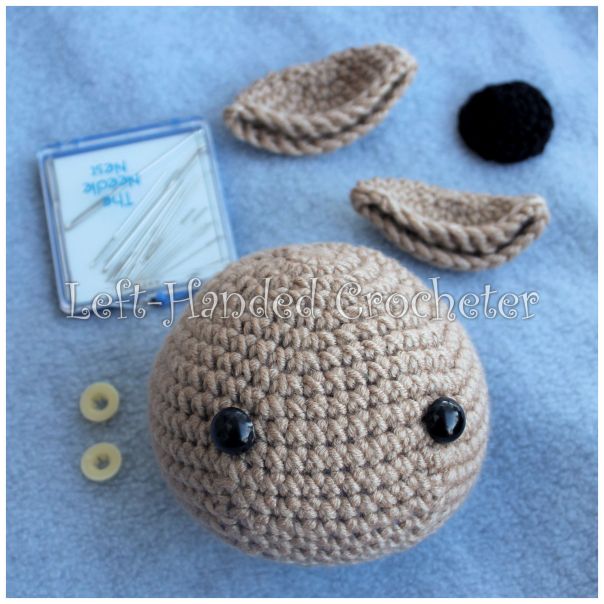
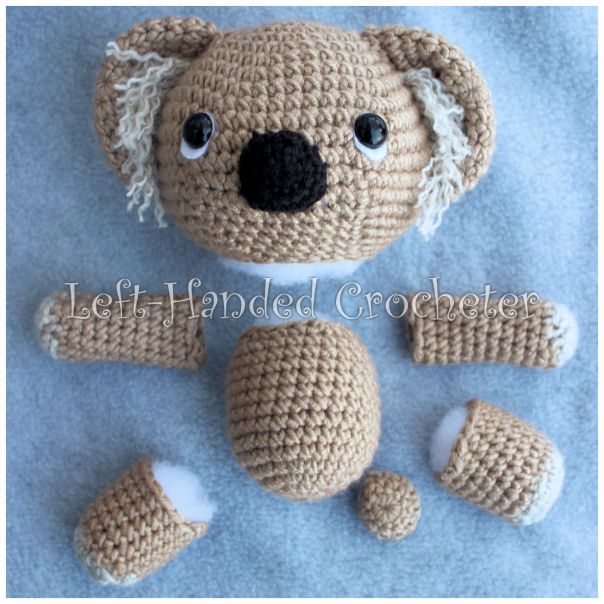
Tie off. Stuff with polyfil. Insert eyes between rows 11 and 12 with 13 stitches in between them. I like to wait to put the backs on the safety eyes until I have the nose sewn on, just in case I want to adjust their placement.

IMG_0297

Nose:

With black, ch 3. Sl st to first ch to create circle. (Instead, you can perform the “magic circle” if you’d like.)

Row 1: ch 1, 10 sc inside of circle. (10 stitches)

Row 2: Sc in first 3 stitches, inc in next 4 stitches, sc in last 3 stitches. (14 stitches)

Row 3: Sc in each stitch around. (14 stitches)

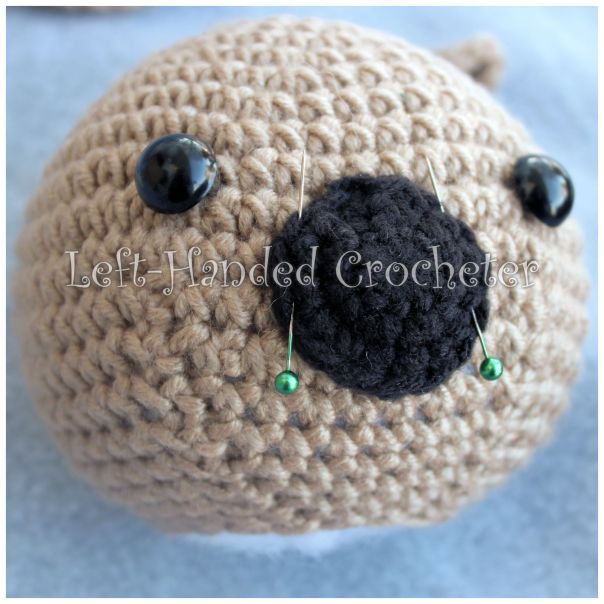
Tie off. Position on face in between eyes and sew on. You can use straight pins to hold it in place if you’d like.

IMG_0300

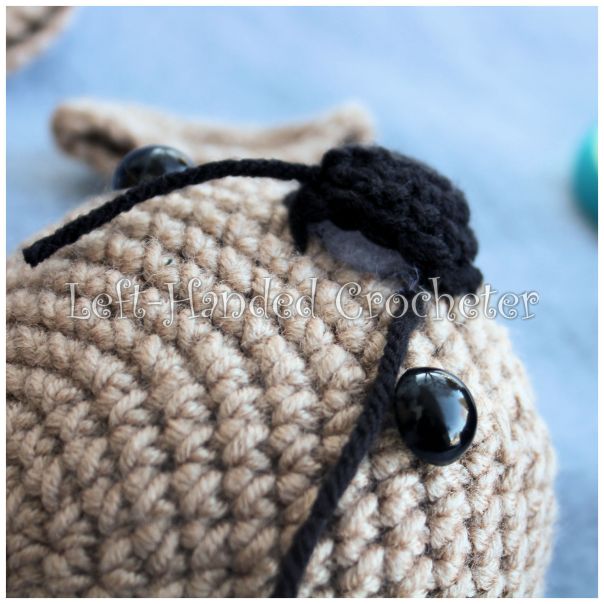
Before closing, stuff some polyfil into the nose.

IMG_0303

Ears:

With chincilla, ch 3. Sl st to first ch to create circle. (Instead, you can perform the “magic circle” if you’d like.)

Row 1: ch 1, 10 sc inside of circle. (10 stitches)

Row 2: *Inc in first stitch, sc in next stitch, repeat from * around. (15 stitches)

Row 3: *Inc in first stitch, sc in next 2 stitches, repeat from * around. (20 stitches)

Row 4: *Inc in first stitch, sc in next 3 stitches, repeat from * around. (25 stitches)

Rows 5-7: Sc in each stitch around. (25 stitches)

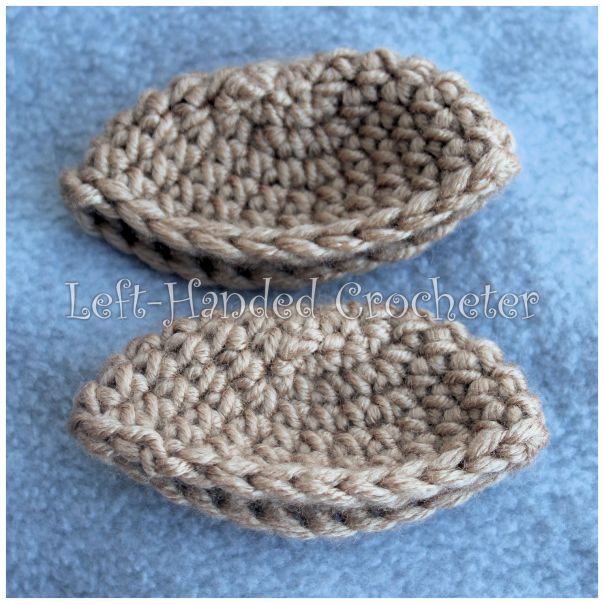
Tie off. Fold flat. The ears will have a slight curve to them.

IMG_0306

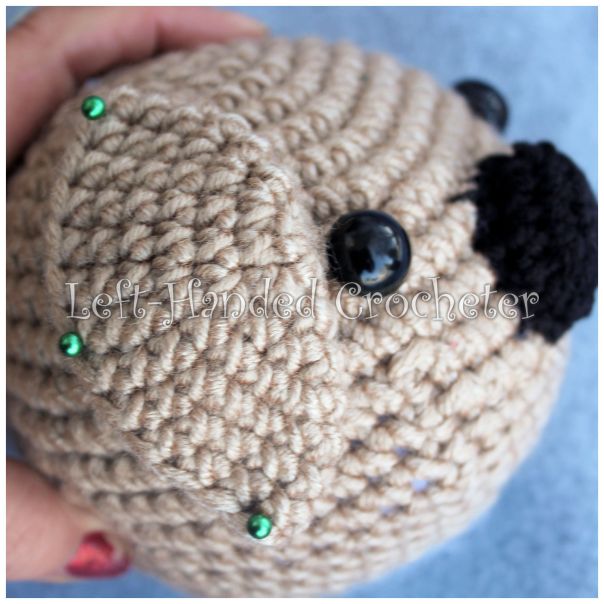
Lay ears on face so that they almost touch the eyes. You can use straight pins to hold them in place if you’d like.

IMG_0310

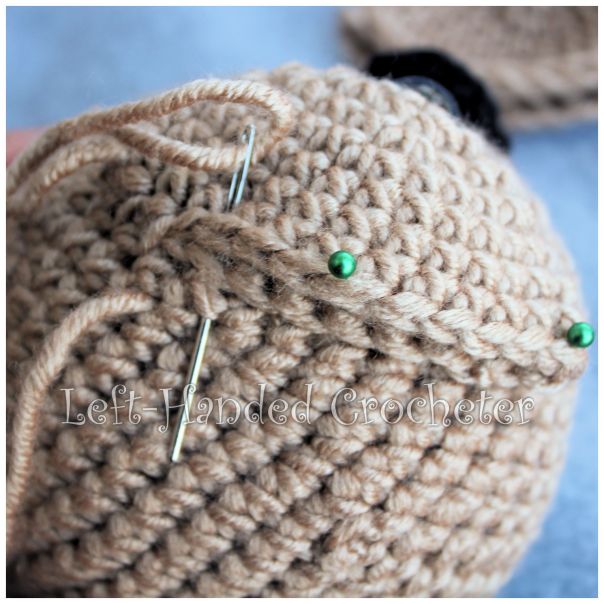
Sew on, following the curve of the ear.

IMG_0314

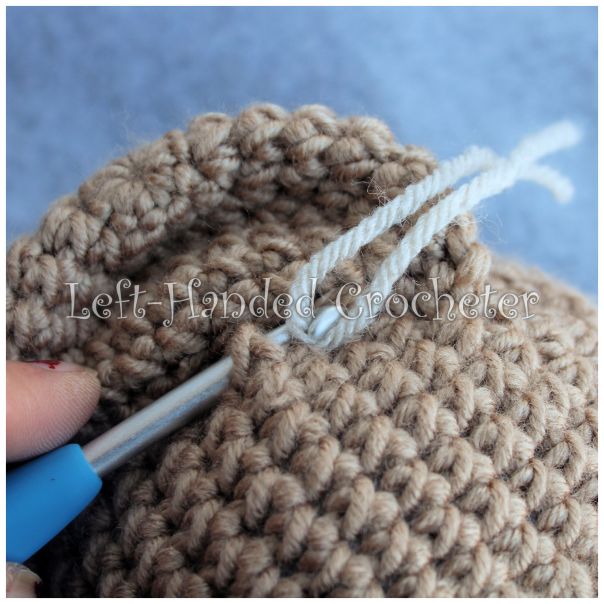
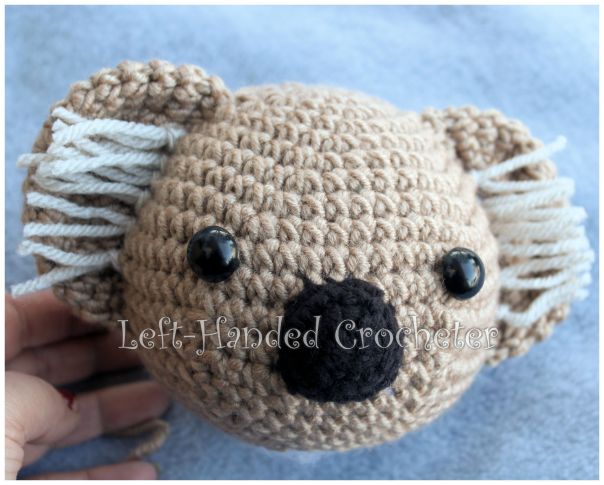
Cut pieces of linen yarn and attach them close to the ear to create the hair.

IMG_0316

Trim them to the size you want.

IMG_0318

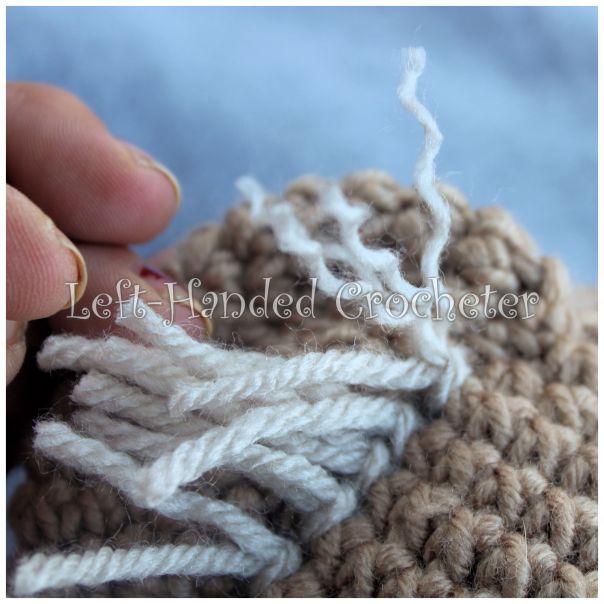
Pull each strand apart to make them fuzzier.

IMG_0320

IMG_0325

Body:

With chincilla, ch 3. Sl st to first ch to create circle. (Instead, you can perform the “magic circle” if you’d like.)

Row 1: ch 1, 10 sc inside of circle. (10 stitches)

Row 2: *Inc in first stitch, sc in next stitch, repeat from * around. (15 stitches)

Row 3: *Inc in first stitch, sc in next 2 stitches, repeat from * around. (20 stitches)

Row 4: *Inc in first stitch, sc in next 3 stitches, repeat from * around. (25 stitches)

Rows 5-13: Sc in each stitch around. (25 stitches)

Row 14: *Dec in first 2 stitches, sc in next 3 stitches, repeat from * around. (20 stitches)

Tie off. Stuff tight with polyfil.

Arms:

With linen, ch 3. Sl st to first ch to create circle. (Instead, you can perform the “magic circle” if you’d like.)

Row 1: ch 1, 10 sc inside of circle. (10 stitches)

Row 2: *Inc in first stitch, sc in next stitch, repeat from * around. (15 stitches)

Switch to chinchilla.

Row 3: *Dec in first 2 stitches, sc in next stitch, repeat from * around. (10 stitches)

Rows 4-13: Sc in each stitch around. (10 stitches)

Tie off. Stuff halfway with polyfil.

Legs:

With linen, ch 3. Sl st to first ch to create circle. (Instead, you can perform the “magic circle” if you’d like.)

Row 1: ch 1, 10 sc inside of circle. (10 stitches)

Row 2: *Inc in first stitch, sc in next stitch, repeat from * around. (15 stitches)

Row 3: *Inc in first stitch, sc in next 2 stitches, repeat from * around. (20 stitches)

Switch to chinchilla.

Row 4: *Dec in first 2 stitches, sc in next 2 stitches, repeat from * around. (15 stitches)

Rows 5-10: Sc in each stitch around. (15 stitches)

Tie off. Stuff tight with polyfil.

Tail:

With chinchilla, ch 3. Sl st to first ch to create circle. (Instead, you can perform the “magic circle” if you’d like.)

Row 1: ch 1, 10 sc inside of circle. (10 stitches)

Row 2: Sc in each stitch around. (10 stitches)

Tie off.

IMG_0321

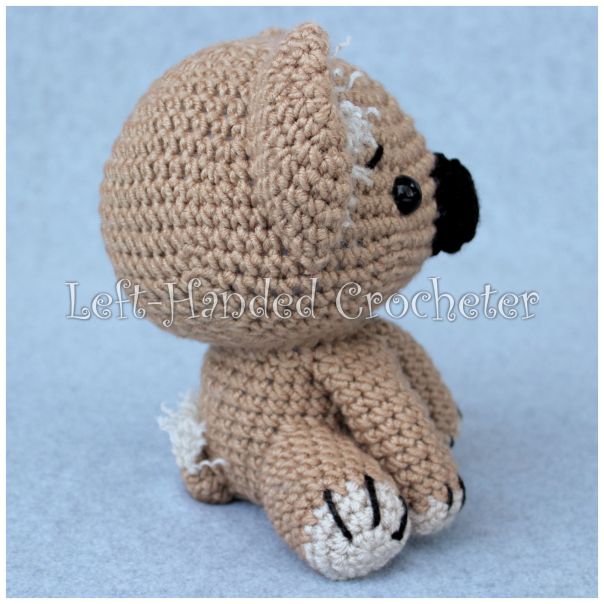
Sew body onto head. Sew legs onto body, making sure to keep them even. You want them slightly towards the front, but mostly facing the sides. Using straight pins to put them in place will help you to get them even.

IMG_0327

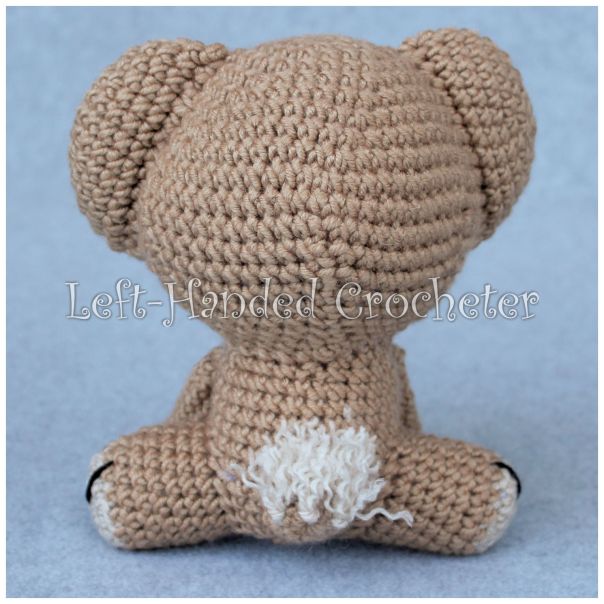
Sew arms on. Sew tail on back, making sure to position it low enough that it will help balance the koala. Stuff some polyfil into the tail before closing off. You can also add more linen yarn to the tail to make it fluffier.

IMG_0387

When the koala sits, his tail and legs should keep him balanced.

IMG_0379

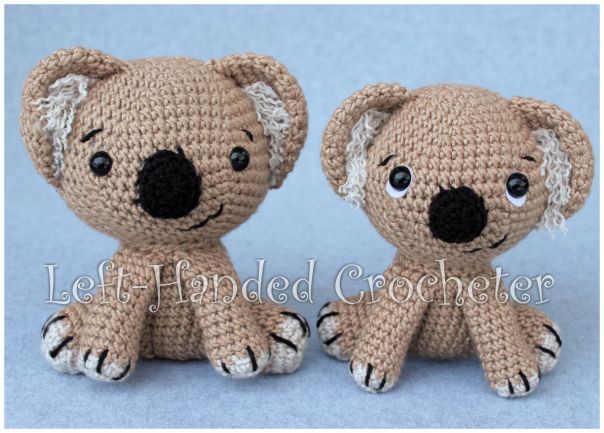
Using your black yarn, sew on a mouth, eyebrows and “claws” on his feet. You can do other things with him too, like add felt under his eyes. I made another one using a smaller hook, so he’s just slightly smaller than Kevin.

IMG_0388

I like both of them, but as you can see adding the felt gave him a different look and expression.

I hope you enjoy this pattern! You’re welcome to sell items that you make using my patterns, as long as you don’t post the pattern anywhere else, and link back to my page if you’d like to. If there are any mistakes, or something is unclear, please feel free to leave me a comment and let me know. Or message me on Facebook. If you create any koalas of your own, be sure to post a photo on my Facebook page so I can see. I love seeing all of the things people are creating, and I’d love to see the different variations that people make of these.
What Do I Do With All of This Scrap Yarn?

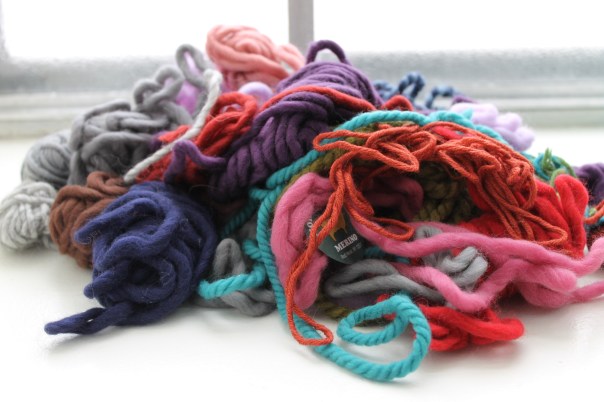
If you’re a crocheter, or a knitter, then you know that a lot of the time you finish your project and you still have yarn left. What do you do with it? If you’re like me, you throw it in a bin or bag and move on to the next, fresh new skein of yarn. Eventually, though, those scraps of yarn start to build up, and it’s tough to get yourself to just throw it away. You paid good money for that yarn, and you’re just sure you’ll end up needing it the minute it’s in the trash.

I recently had a conversation with a friend about what to do with all of that scrap yarn. There are really a lot of possibilities. I found a few ideas that I love, and I thought I’d share them with you.

Donate Your Yarn

destash-scrap-yarn-1

If you have a bunch of scrap yarn that is cluttering up your house, and you know you’ll probably never get around to doing anything with it, consider donating it. Call up a local daycare, preschool or elementary school and see if they have a use for it. Call some senior centers or nursing homes. There are a lot of crafts out there that only require a bit of yarn, and some of these places may be able to put your scraps to good use. Plus, it can be tough for them to budget in art and craft supplies, so they may be thrilled to receive your donation. This post on Craftsy talks a bit about donating your yarn, but also gives a neat idea for organizing and storing your scraps.

bird2

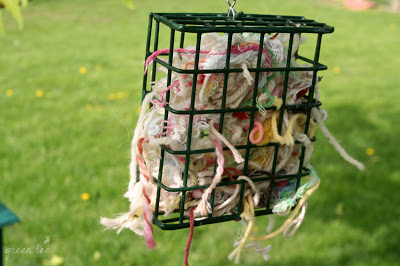
You could also donate it to the birds. I thought this was a neat idea, because it would help birds make strong, warm nests. Plus, it makes them more colorful. If your scraps of yarn are too small to really do anything with them, then this could be a neat alternative to throwing them away. I’m not sure how safe it is for birds, so maybe do a bit of research on type of yarn first.

Make Some Words

6a00e54fbad09988340153918d110a970b-700wi

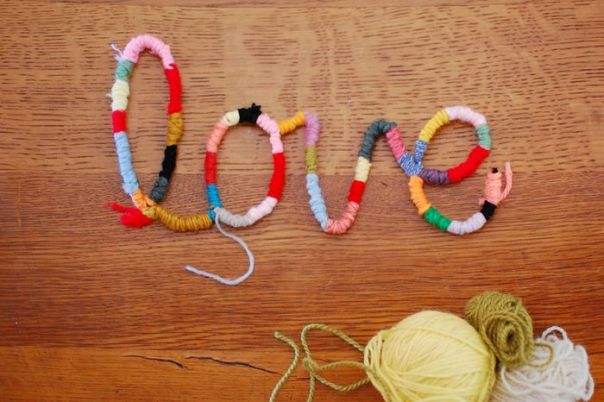
If you have kids, this could be a fun project for them to use up those scraps of yarn. Just grab some pipe cleaners next time you’re at the craft store.

yarn-monogram-letters-hero-580x870

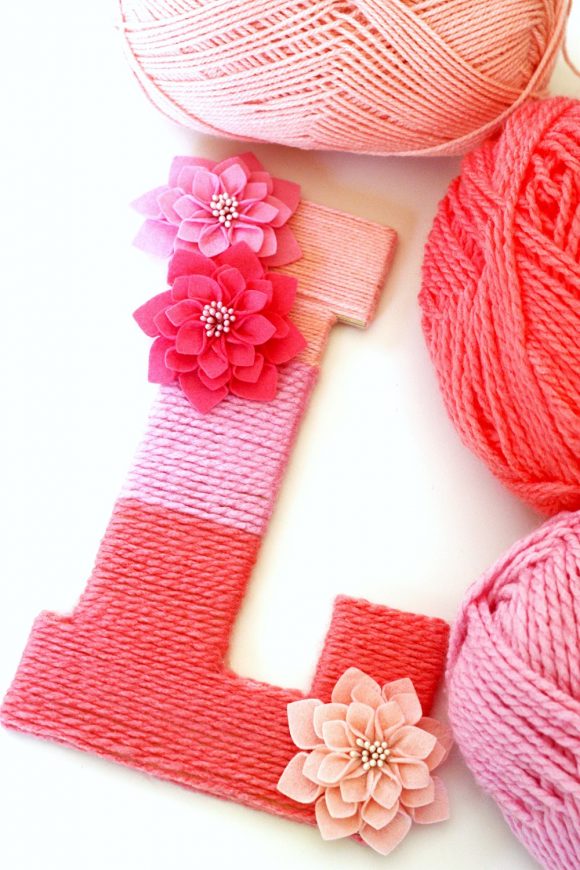
With a glue gun, some scrap yarn, and a few embellishments, you can make a pretty letter to hang on your wall.

ZoeLetters2

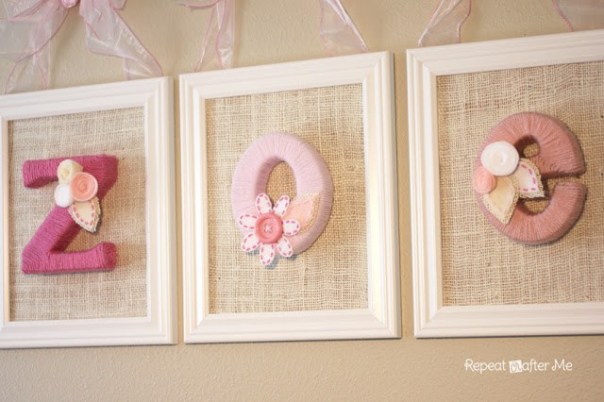
Or you can be a little bit more elaborate and make a whole name to hang on your wall.

161

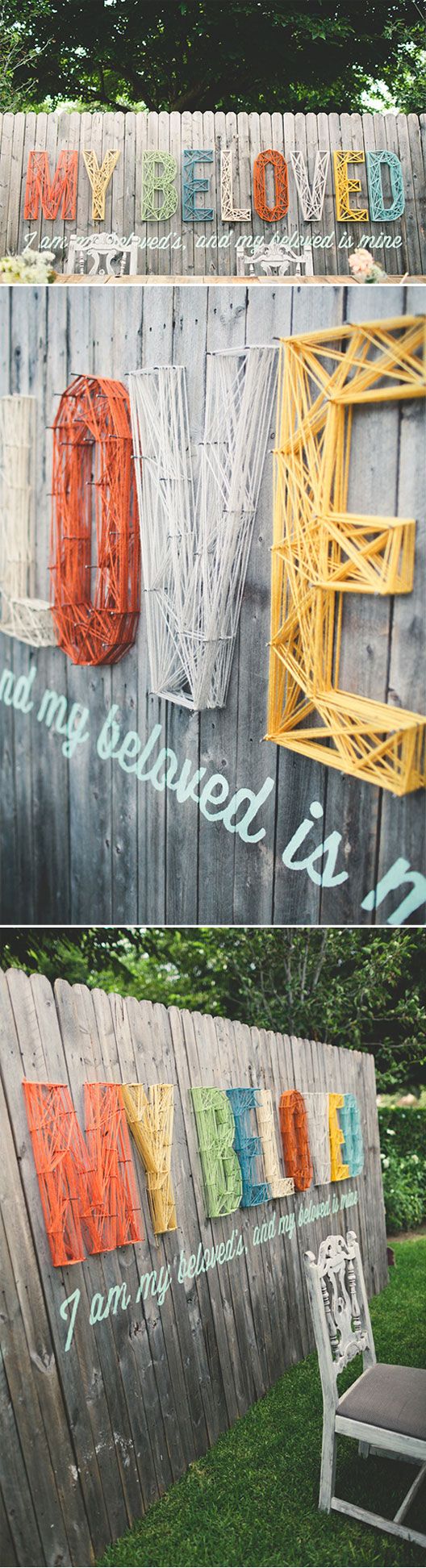
You could also grab some nails and turn a boring fence into a great place to hang out, and a pretty background for photographs.

Make Some Art

Picnik collage #2

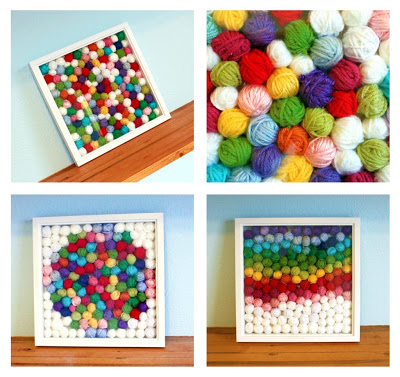
This art project would be really cute hanging in a nursery, and if you have enough colors you could even do a more detailed design. This is done with rolls of yarn, but you could easily do it with pom-poms too.

january-centerpiece

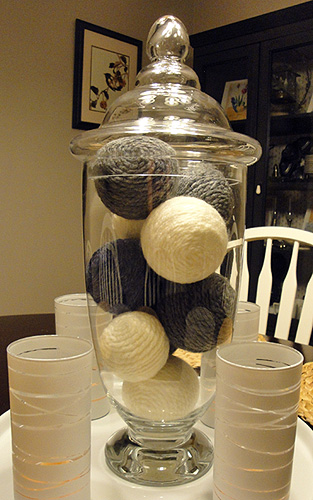
You can turn your scraps of yarn into a pretty centerpiece for your table by gluing it to styrofoam balls.

Wrap Some Presents

PomPoms1

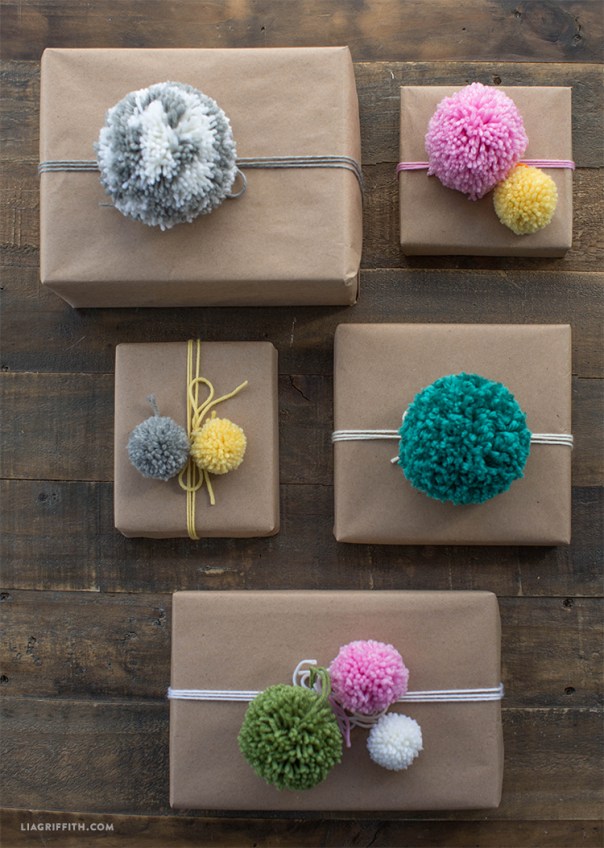
You can use that extra yarn to wrap around gifts for an extra little touch. Attach a pom-pom or two, and it will look even better.

Make Some Bookmarks

download

Bookmarks made out of yarn are such a cute idea. You could really crochet pretty much anything to use as a bookmark, but I particularly liked these Harry Potter themed scarf bookmarks.

yarn-ball-pom-pom-bookmark-2

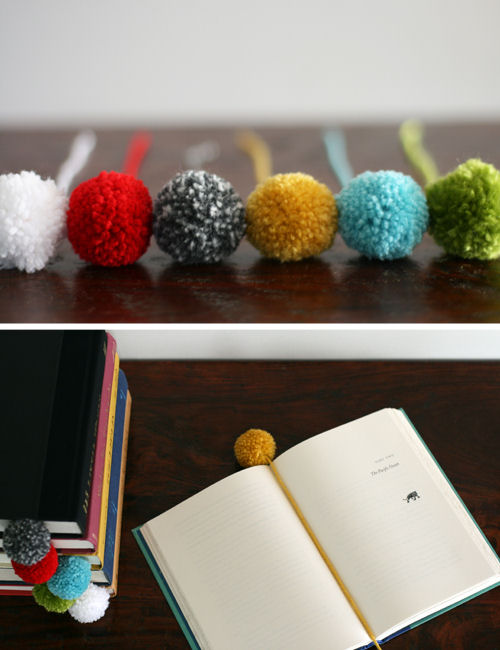
These pom-pom bookmarks don’t require any crocheting at all. It’s a project your kids could actually do with their scrap yarn, and would make cute gifts for their teachers.

Make Some Hat Ornaments

hat13-

I thought these cute hats were a great alternative to making pom-poms. They’re easy enough for kids to do, and they’d make great decorations to hang around your house all winter long. You could even make a couple of them and add them to the top of your packages during the holidays. I make hats and scarves for everybody in the family for Christmas. I think these would be cute on top of those presents.

Make an Afghan

6a00e551101c548834013482846e8d970c-500wi

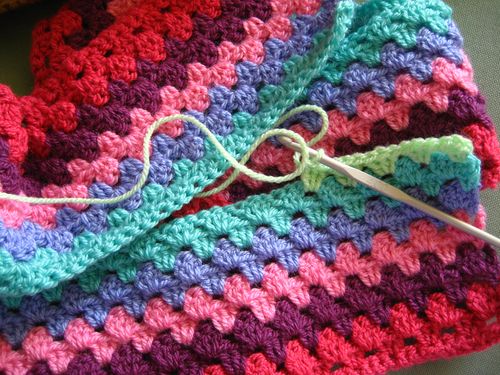
There are a lot of afghan patterns out there that are designed for using up scraps of yarn, but almost any pattern will work really, as long as you don’t mind sudden color changes and no real color scheme. A granny stitch blanket works well for this because it shows off each color quite well.
Easy-Ripple-Afghan

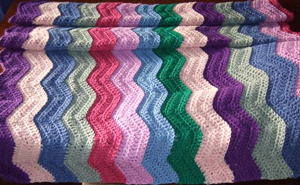
Ripple afghans also look nice with scraps of yarn because the ripples make the colors all stand out quite well.

hexis2

You could also make hexagons with your scrap yarn and sew them together when you have enough for a blanket. I think this is a neat idea if you have a bin or something to throw them in. Just grab that leftover yarn when it starts to get overwhelming and crochet up some hexagons.

Make Some Pom-poms

img_9352

Making pom-poms is my favorite thing to do with scrap yarn. I always like attaching them to hats that I make, but there are so many different things you can do with pom-poms. Go check out my pom-pom post to see a few of my favorite ideas.

I hope this post was helpful. What do you do with your scrap yarn? Have you found other ideas that aren’t listed here? Go drop by my Facebook page and tell me about it, or post photos of things you’ve made with scrap yarn.